Hand-painted in oil
About this Artwork
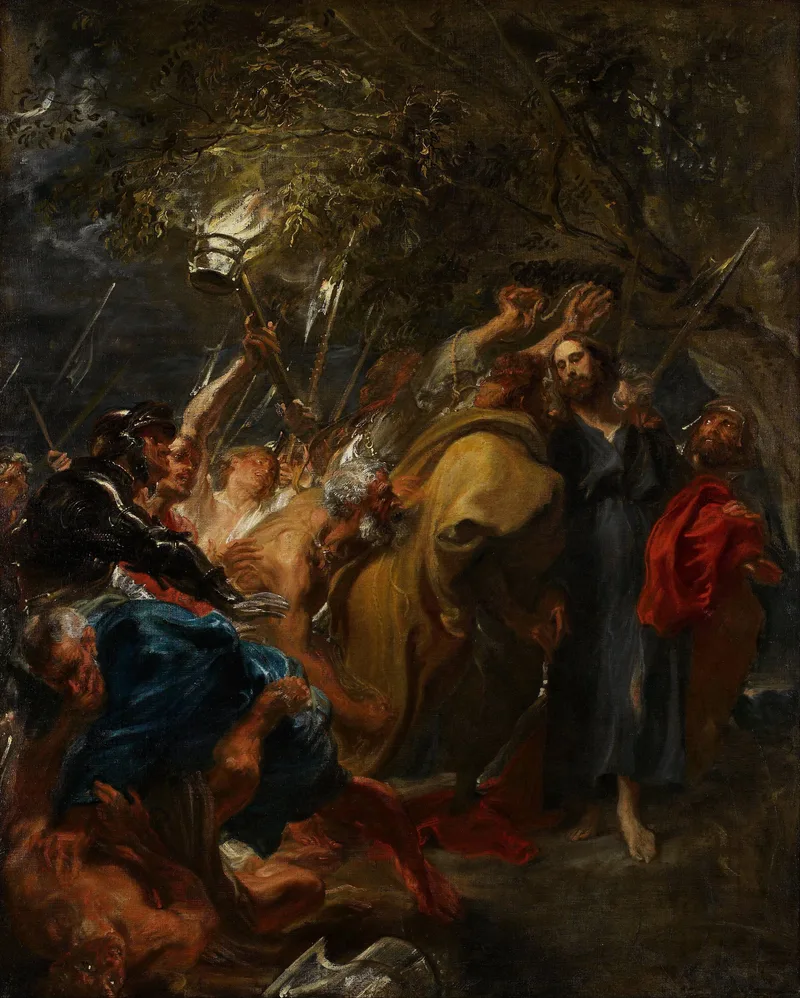
The arrest in the garden
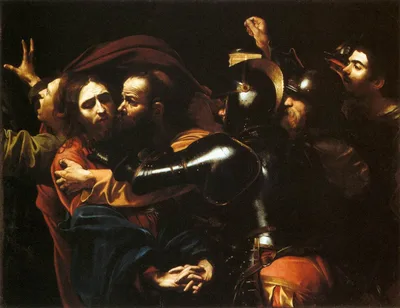
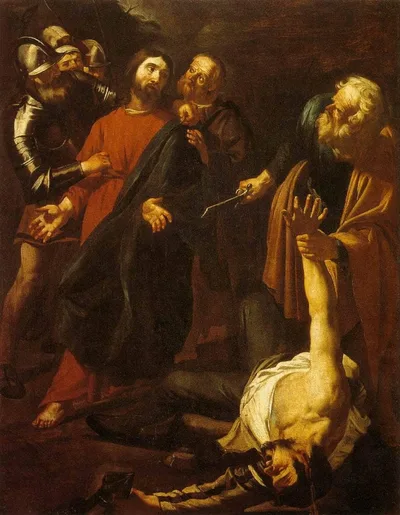
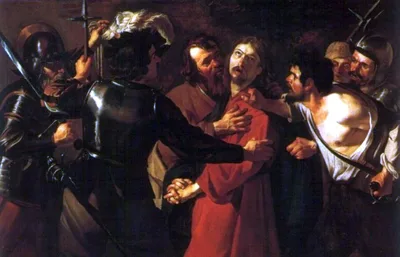
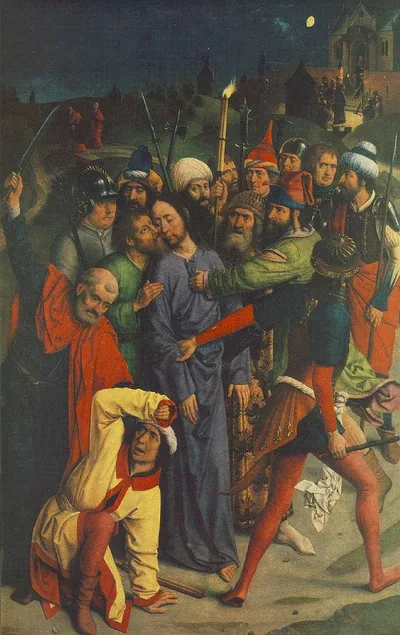
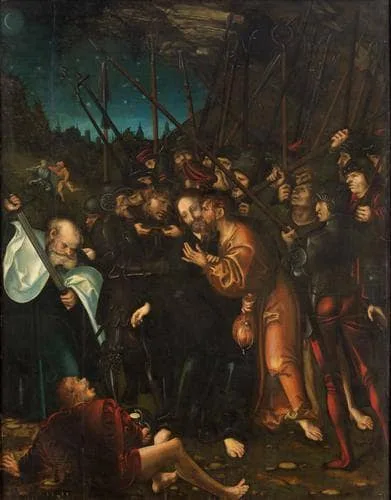
The Capture is the moment the Passion becomes irreversible. After the prayer on the Mount of Olives, an armed party arrives at the garden, Judas identifies Christ, and a disciple strikes at a servant with a sword. All four gospels report it, with differences in who says what, and painting settled on the crush of bodies and lanterns as the way to show it.
Where it sits in the cycle
Between Gethsemane and the trial. Everything before it is voluntary movement; everything after it happens to a prisoner. That is why the episode is the true opening of the Passion sequence rather than the Last Supper, which precedes it, or the flagellation, which follows the trials.
The record
The catalogue gives Anthony van Dyck, 1620, and the Museo del Prado, Madrid, Spain — one of eleven works in this catalogue recorded there. The canvas measures 344 x 249 cm, upright and at the scale of a church picture rather than a gallery one. The style is entered as Baroque and the artist as Flemish; the subject fields class the work as a group composition and as religious. The measured palette reads as brown. The entry names no patron and no earlier location, and none is supplied.
Sources
3 references- Dyck, Anthony van — Getty ULAN
Flemish painter, 1599-1641, active in England
- Anthony van Dyck — Wikipedia
Sir Anthony van Dyck (; Dutch: Antoon van Dijck [ˈɑntoːɱ‿vɑn ˈdɛik]; 22 March 1599 – 9 December 1641) was a Flemish Baroque artist, who became the leading court painter in England after success in the Spanish Netherlands and Italy. The seve
- Anthony van Dyck - The Capture of Christ - WGA07432 — Wikimedia Commons
High-resolution image of the work, hosted on Wikimedia Commons.