Hand-painted in oil
About this Artwork
Between the episodes
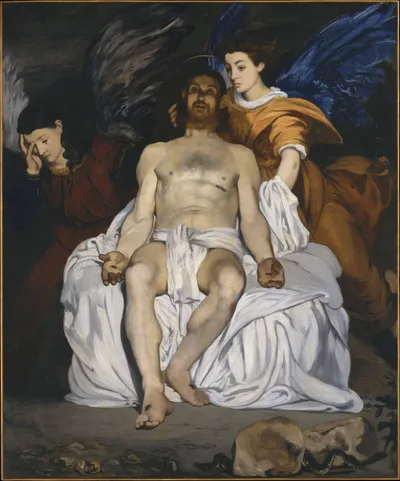
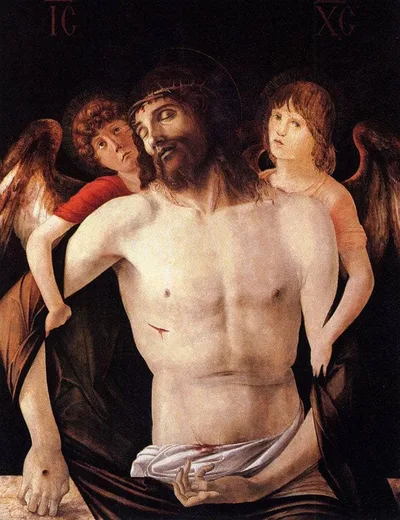
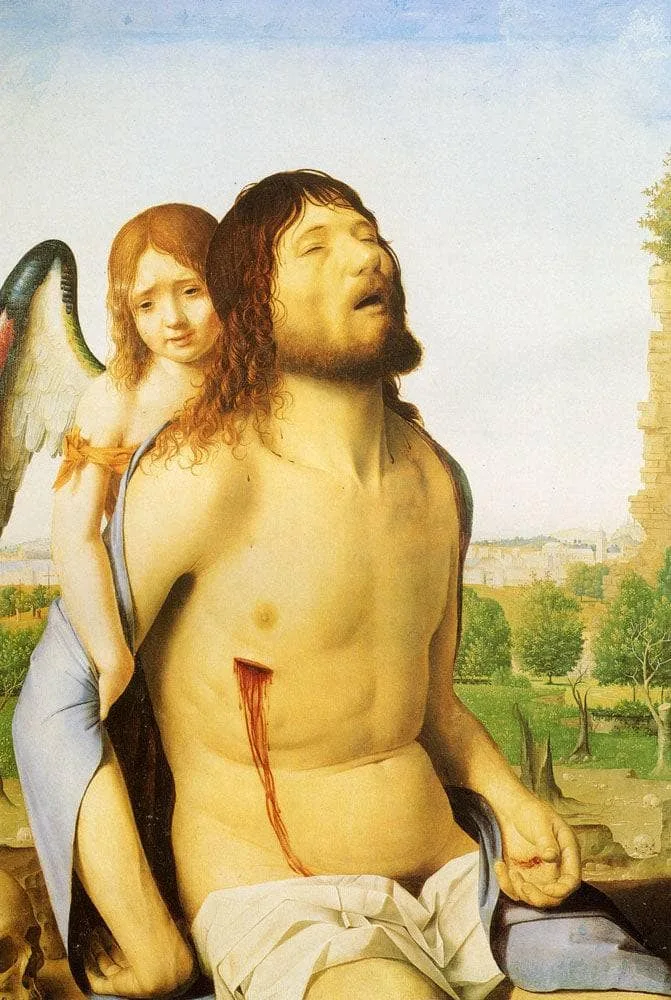
The title names a body and an angel, and that pairing is not a reported event. The gospels give no moment in which an angel supports the dead Christ. The subject belongs to the devotional images that grew out of the Passion without belonging to its sequence — the body shown alone or with attendants, offered to the viewer rather than narrated.
Its relation to the cycle
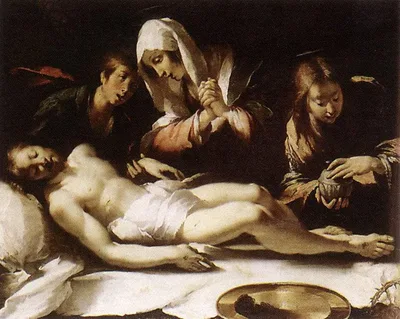
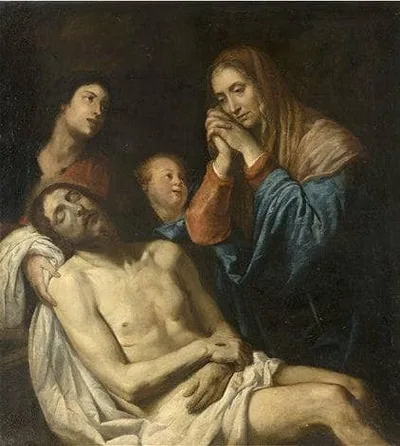
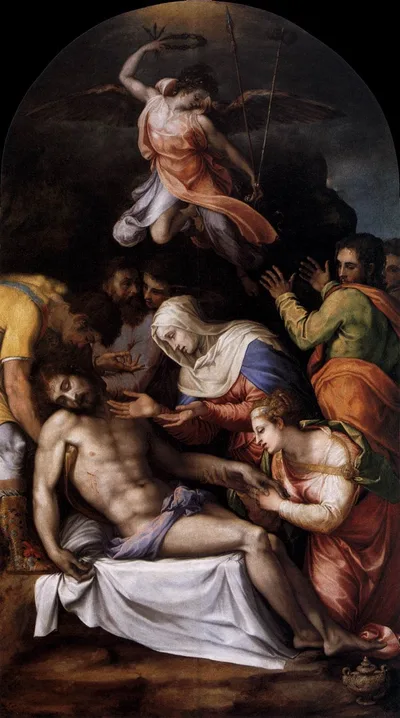
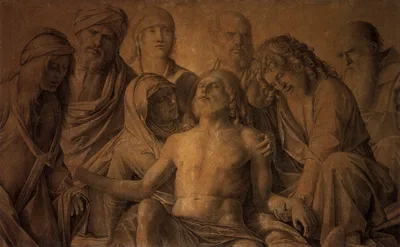
It sits alongside the Lamentation and the Entombment without being either. A narrative panel answers the question of when; this kind of image refuses it, which is exactly what made it useful over an altar, where the same body is present at every mass regardless of the day. Nineteen titles in this catalogue name a Dead Christ, and they divide between narrative scenes and images of this second, timeless kind.
The catalogue entry
The record gives Antonello da Messina, dates the panel to 1478, and places it in the Museo del Prado, Madrid, Spain. It measures 51 x 74 cm — small, and horizontal, which is unusual for a devotional image of a single figure. The style is entered as Early Renaissance and the artist as Italian; the subject fields class the work as a single male figure. The measured palette reads as yellow. No commission or ownership history appears in the record.
Sources
4 references- Antonello da Messina — Wikipedia
Antonello da Messina (Italian pronunciation: [antoˈnɛllo da (m)mesˈsiːna]; c. 1425–1430 – February 1479), properly Antonello di Giovanni di Antonio, but also called Antonello degli Antoni and Anglicized as Anthony of Messina, was an Italian
- Antonello da Messina — Getty ULAN
Italian painter, ca.1430-1479
- The Dead Christ Supported by an Angel — Wikidata
description: painting by Antonello da Messina; inception: 1475-00-00; dimensions: +74 × +51 cm; collection: Museo del Prado
- museodelprado.es — record for "The Dead Christ Supported by an Angel"
Primary source record for this work (museodelprado.es).