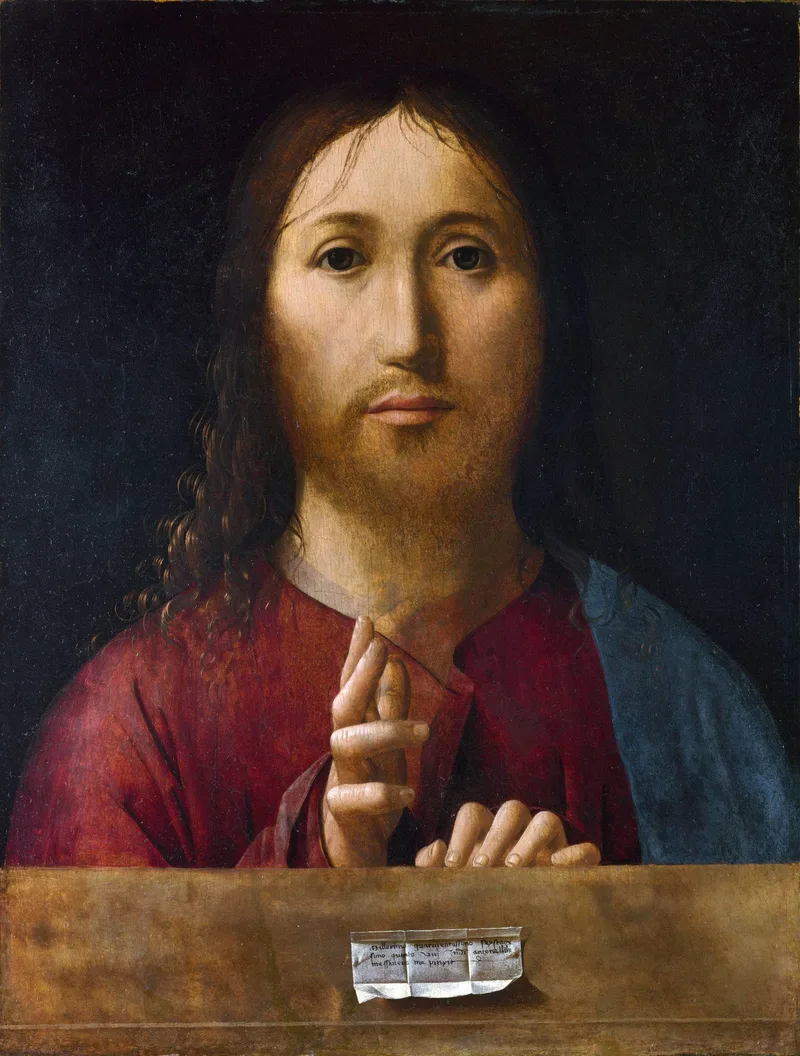
Hand-painted in oil
About this Artwork
Salvator Mundi, in its Sicilian form
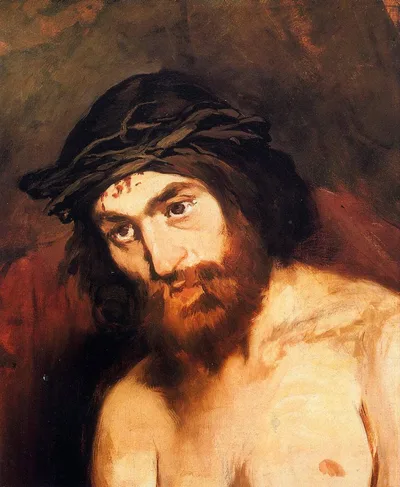
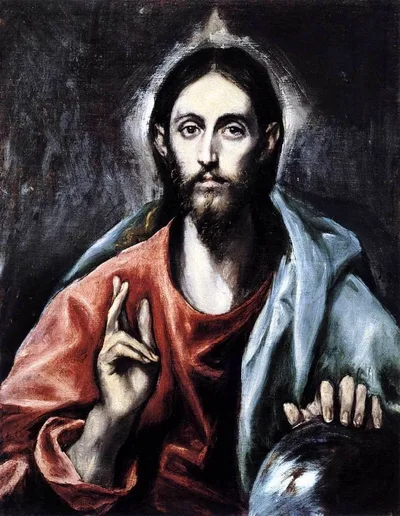
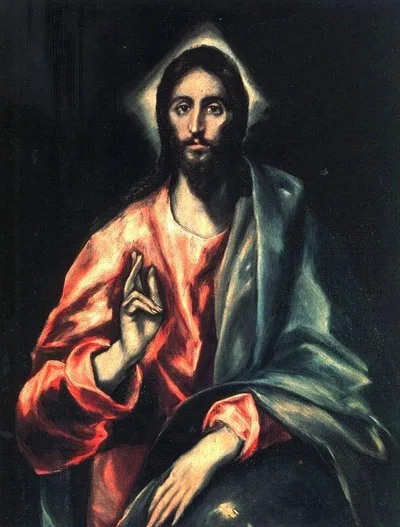
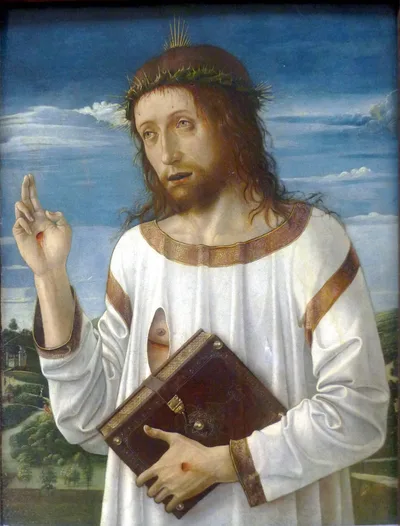
The same title as other entries here, and a different tradition behind it. The blessing Christ shown frontally at half length, hand raised, is the type known as Salvator Mundi — Saviour of the World. It arrived in fifteenth-century Italy partly through Netherlandish panels, whose close framing and small format it kept, and it is one of the few images of Christ built to be met at eye level rather than looked up at.
Outside the sequence
There is no moment in the gospels to which this belongs. It is not the Ascension and not the risen Christ of the appearances; it is the figure addressed rather than narrated. That is why such panels are small: at 38.7 by 29.8 centimetres, as the record gives here, the picture is made for one viewer at close range, not for a congregation.
The catalogue entry
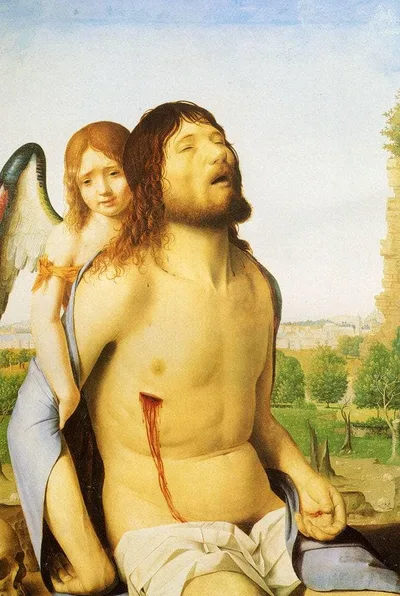
The record names Antonello da Messina as the artist and 1465 as the date of creation, with the work in the National Gallery, London. The style is entered as Early Renaissance and the artist as Italian; the subject fields class it as a single male figure and as religious. The measured palette reads as red. The entry carries no note on the support, the commission, or the history of ownership.
Sources
1 references- Antonello da Messina — Getty ULAN
Italian painter, ca.1430-1479