Hand-painted in oil
About this Artwork
After the beating
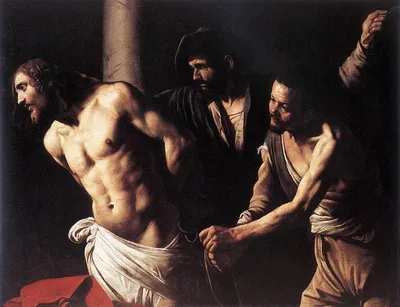
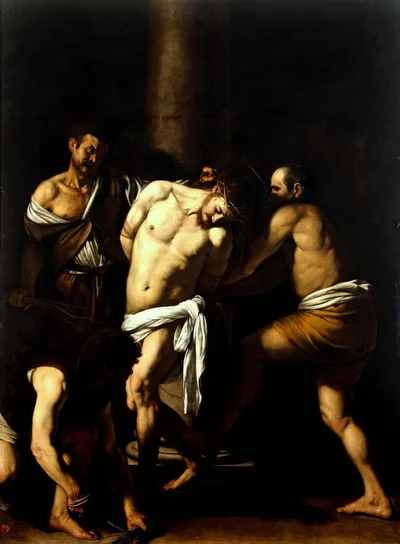
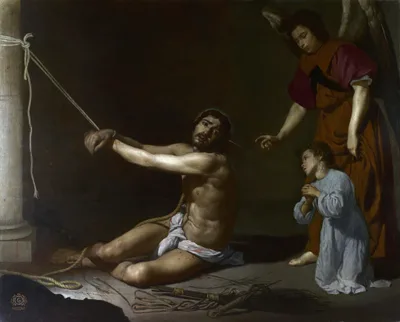
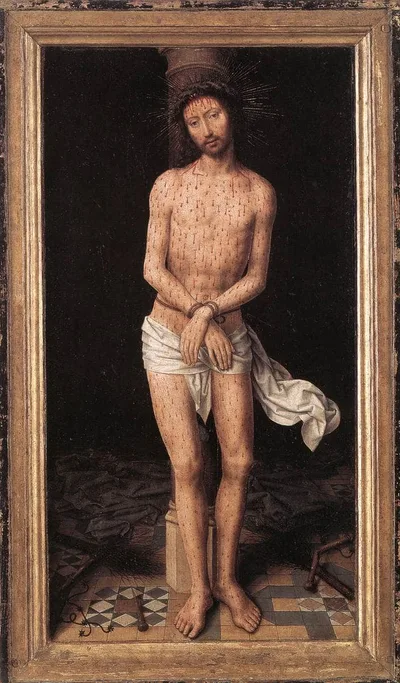
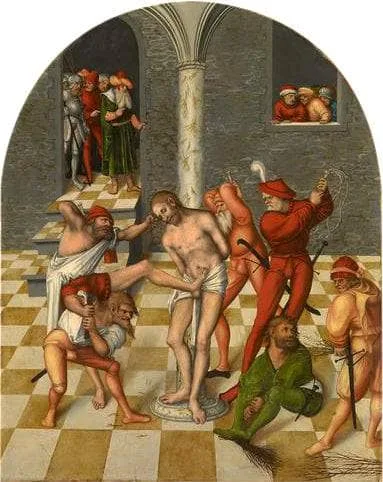
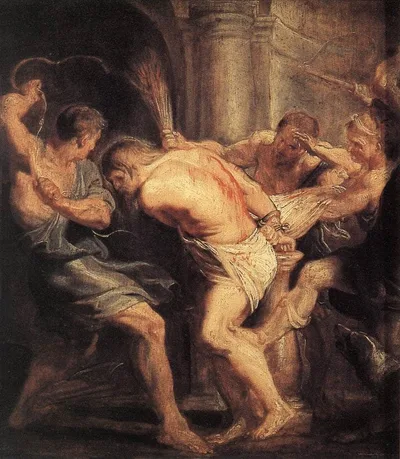
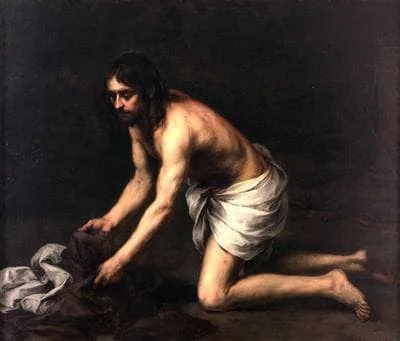
The flagellation is reported in a single clause: Pilate had him scourged. Painting expanded the clause in two directions — the beating itself, at the column, and the interval afterwards, when the soldiers have gone. The second is not a separate gospel moment but a devotional extension of the first, and it produces a different kind of picture: no tormentors, no action, a figure on the ground and the instruments left behind.
Where it falls
Inside the praetorium, after the sentence and before the crowning with thorns. Nine titles in this catalogue name the flagellation or the scourging, and they divide between the two treatments; this entry belongs to the aftermath.
The record
The catalogue names Bartolome Esteban Murillo, dates the work to 1665, and gives the Krannert Art Museum at the University of Illinois at Urbana–Champaign as the location. It measures 127 by 146 centimetres, a horizontal — the format the aftermath treatment tends to take, since the subject is a body on a floor rather than a body upright at a column. The style is entered as Baroque and the artist as Spanish. The measured palette reads as brown. The record carries no note on how the painting reached Illinois.
Sources
4 references- Bartolomé Esteban Murillo — Wikipedia
Bartolomé Esteban Murillo ( mure-IL-oh, m(y)uu-REE-oh, Spanish: [baɾtoloˈme esˈteβam muˈɾiʎo]; late December 1617, baptised 1 January 1618 – 3 April 1682) was a Spanish Baroque painter. Although he is best known for his religious works, Mur
- Murillo, Bartolomé Estebán — Getty ULAN
Spanish painter and draftsman, 1618-1682
- Christ after the Flagellation — Wikidata
description: painting by Bartolomé Esteban Murillo, now in Museum of Fine Arts, Boston; inception: 1660-01-01; dimensions: +113 × +147.3 cm; collection: Museum of Fine Arts Boston
- mfa.org — record for "Christ after the Flagellation"
Primary source record for this work (mfa.org).