Hand-painted in oil
About this Artwork
A German title in a Roman collection
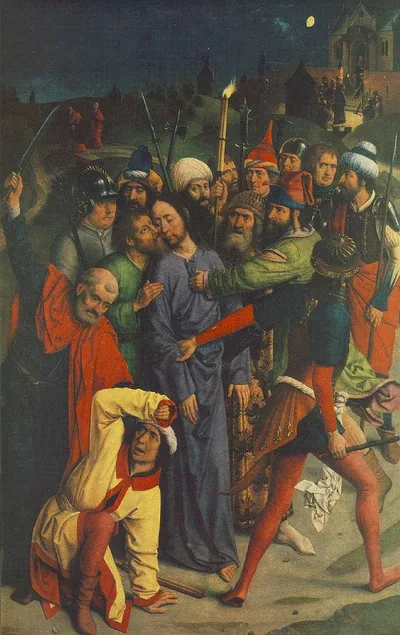
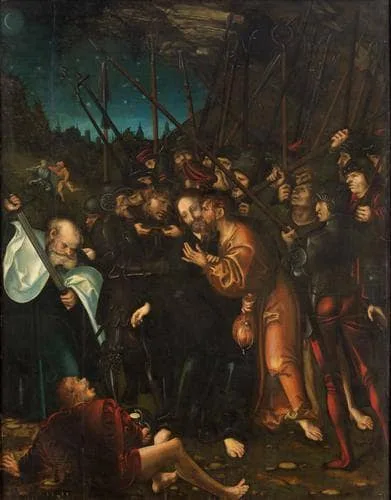
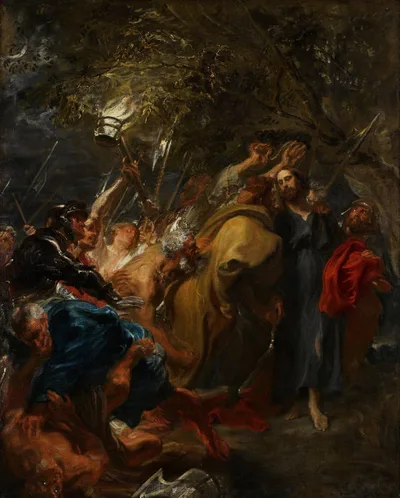
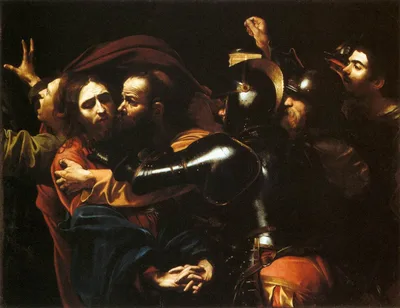
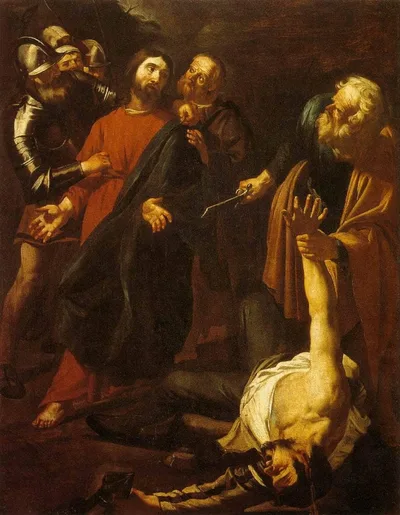
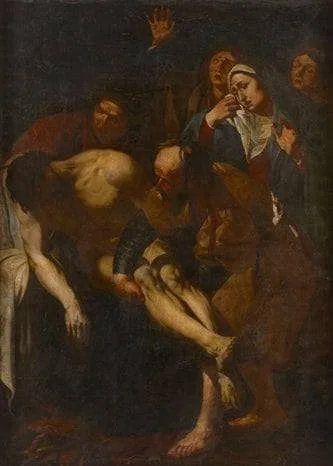
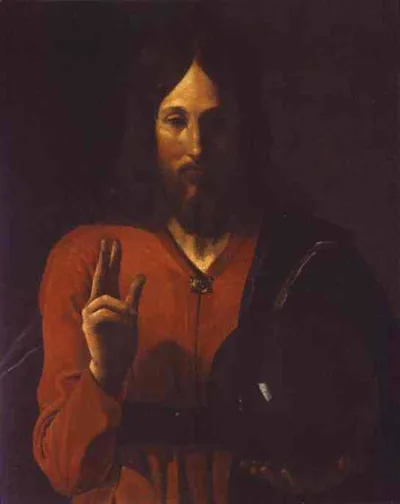
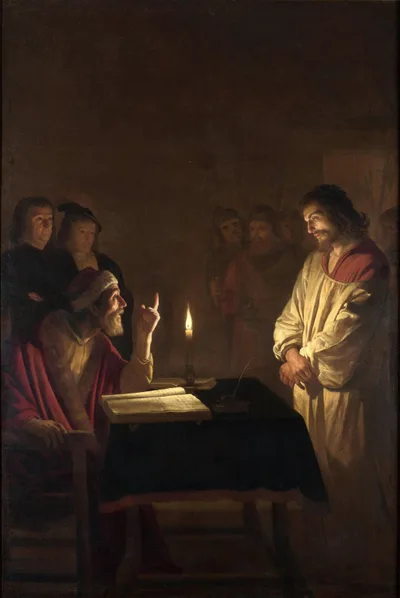
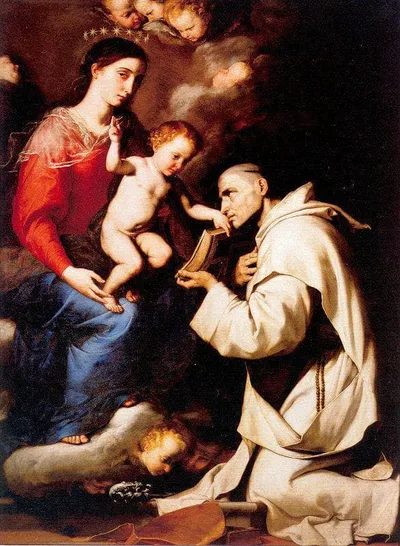
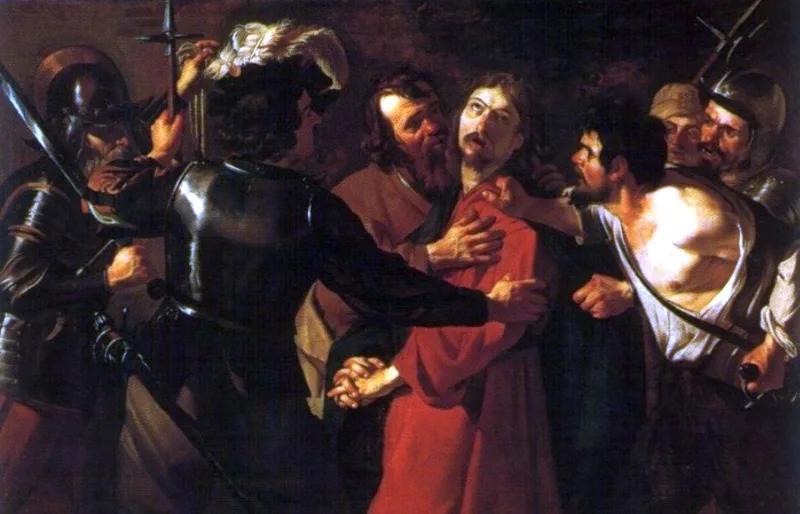
The record enters this work as Gefangennahme Christi — the taking of Christ — for a painter it classes as Dutch, in a gallery in Rome. Catalogues inherit titles from wherever they were first recorded, and this entry keeps a German one. The subject is the arrest in the garden of Gethsemane: Judas arrives with an armed party, the kiss identifies the prisoner, a sword is drawn and an ear is cut off.
Where it falls
Second scene of the Passion, after the prayer on the Mount of Olives and before the night hearings. It is the point at which the narrative changes hands: from here to the entombment, Christ is acted upon rather than acting.
The record
The catalogue names Dirck van Baburen, dates the work to 1619, and gives the Borghese Gallery in Rome. It measures 202 by 139 centimetres, an upright at over life size. The style is entered both as Baroque and as tenebrism — the record's label for painting built on a dark ground and a single narrow light, which is the manner a night arrest calls for. The artist is entered as Dutch. The measured palette reads as red. Nothing on commission or ownership appears in the entry.
Sources
4 references- Dirck van Baburen — Wikipedia
Dirck Jaspersz. van Baburen (c. 1595 – 21 February 1624) was a Dutch painter and one of the Utrecht Caravaggisti. == Biography == Dirck van Baburen was probably born in Wijk bij Duurstede, but his family moved to Utrecht when he was still y
- Hoogstraten, Dirck van — Getty ULAN
Flemish painter and printmaker, 1596-1640
- Gefangennahme Christi — Wikidata
description: painting in the former Hofbrücke of Lucerne (Switzerland), Kdm LU 101b; collection: Municipal archives Luzern
- Baburen, Dirck van - Gefangennahme Christi - 1619 — Wikimedia Commons
High-resolution image of the work, hosted on Wikimedia Commons.