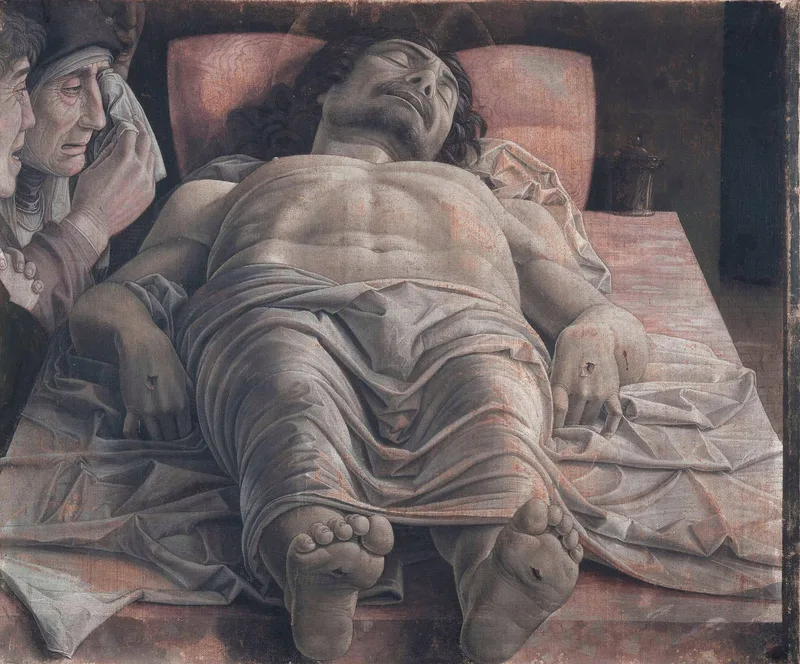
Hand-painted in oil
About this Artwork
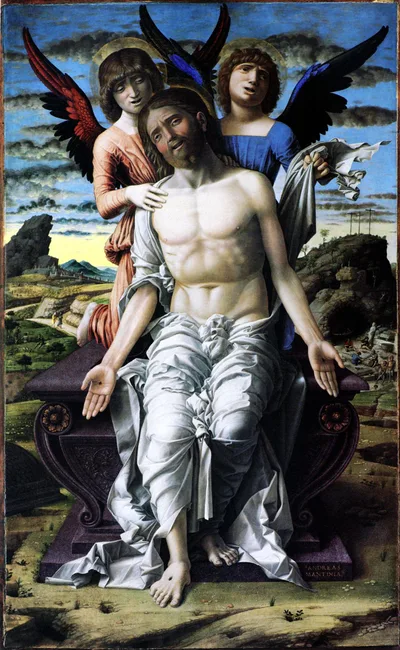
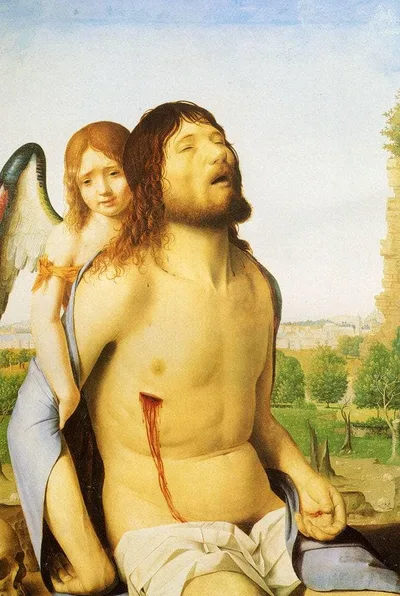
The dead Christ
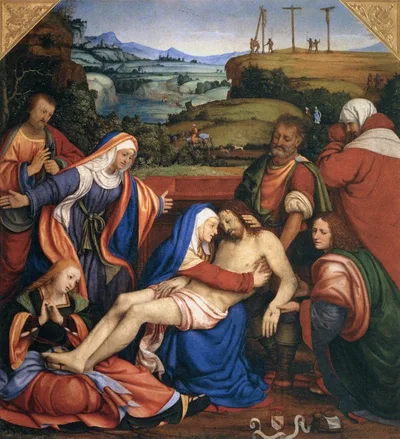
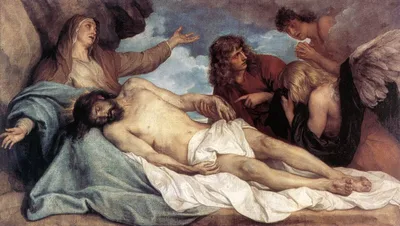
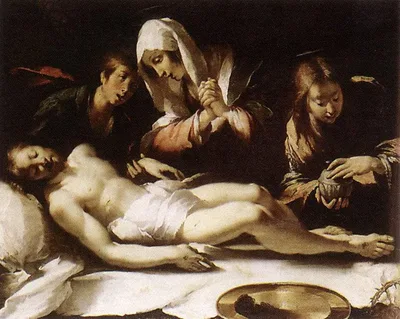
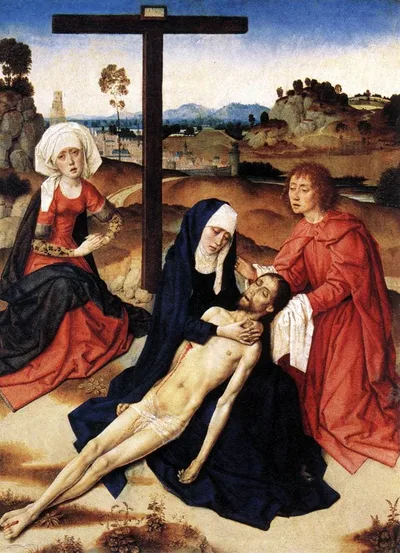
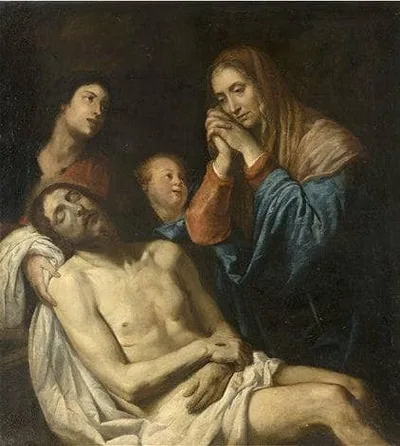
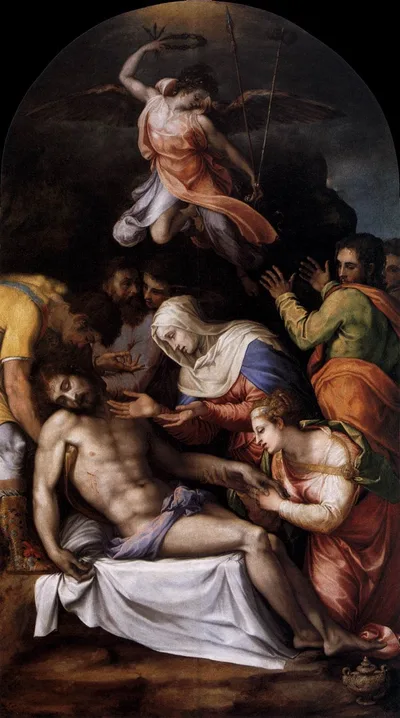
The subject is the body after it has been taken down from the cross and before it is placed in the tomb — the episode painting calls the Lamentation. It is not a scene the gospels narrate in detail; it grew out of the interval between the deposition and the burial and became one of the fixed subjects of the Passion, showing the body laid out with mourners near it.
Where it falls in the cycle
Between the Crucifixion and the Entombment. It is the pause in the narrative: nothing happens in it, and that is its function. Cycles run deposition, lamentation, entombment in sequence, and this is the middle term of the three.
The record
The catalogue gives Andrea Mantegna as the artist and 1478 as the date of creation, with the painting in the Palazzo Brera, Milan. It measures 81 by 68 centimetres — small, close to upright, and far below life size for a subject that fills the panel with a body. The style is classed as Early Renaissance and the artist as Italian, and the subject fields carry the religious classifications without a group or portrait entry. The measured palette is recorded as neutral.
Sources
5 references- Mantegna, Andrea, School of — Getty ULAN
Unknown artist
- Andrea Mantegna — Wikipedia
Andrea Mantegna (UK: , US: ; Italian: [anˈdrɛːa manˈteɲɲa]; c. 1431 – September 13, 1506) was an Italian Renaissance painter, a student of Roman archaeology, and the son-in-law of Jacopo Bellini. Like other artists of the time, Mantegna exp
- Mantegna, Andrea — Getty ULAN
Italian painter, ca. 1431-1506
- Lamentation of Christ (Mantegna) — Wikipedia
The Lamentation of Christ (also known as the Lamentation over the Dead Christ, The Foreshortened Christ, or the Dead Christ and Three Mourners and other variants) is a painting by the Italian Renaissance artist Andrea Mantegna. It portrays
- Andrea Mantegna - The Lamentation over the Dead Christ - WGA13981 — Wikimedia Commons
High-resolution image of the work, hosted on Wikimedia Commons.