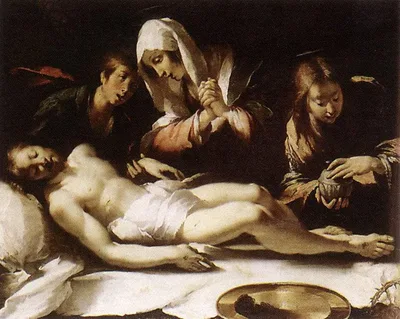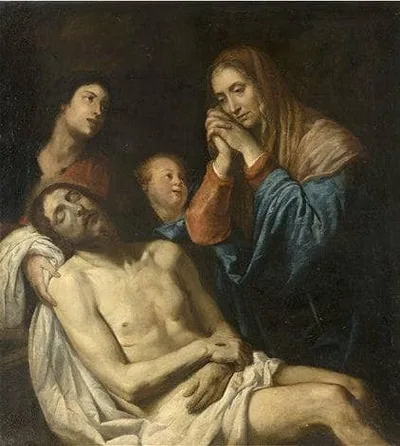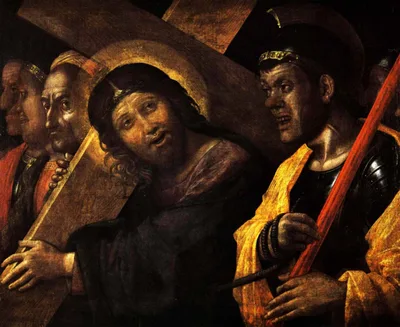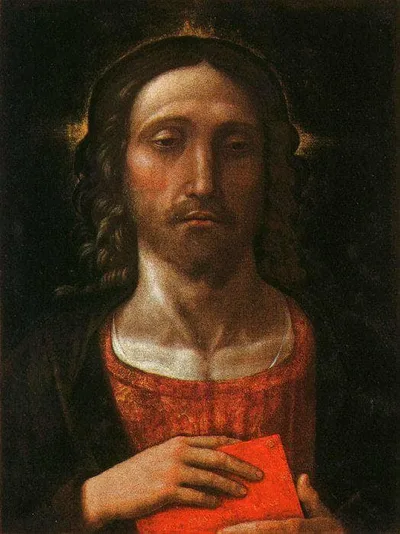
Hand-painted in oil
About this Artwork
Outside time: the Man of Sorrows
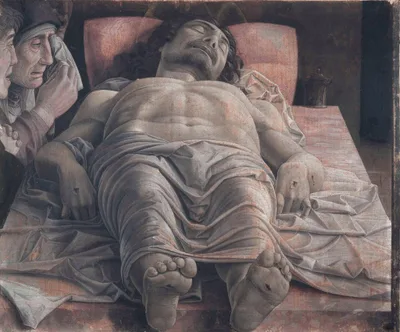
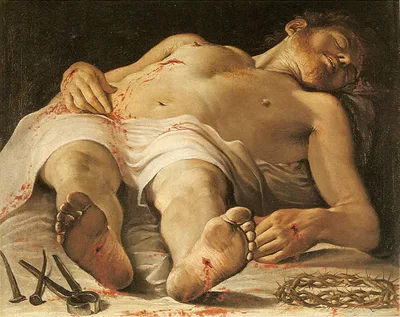
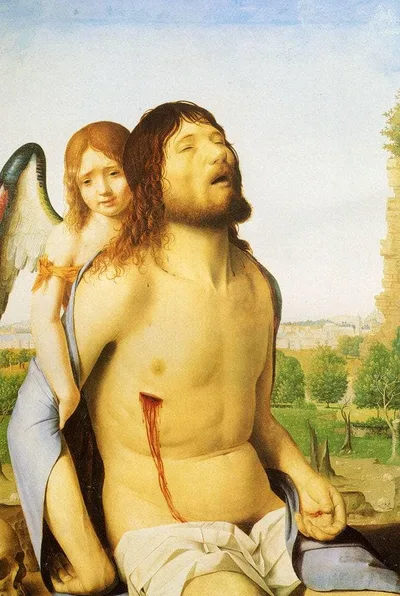
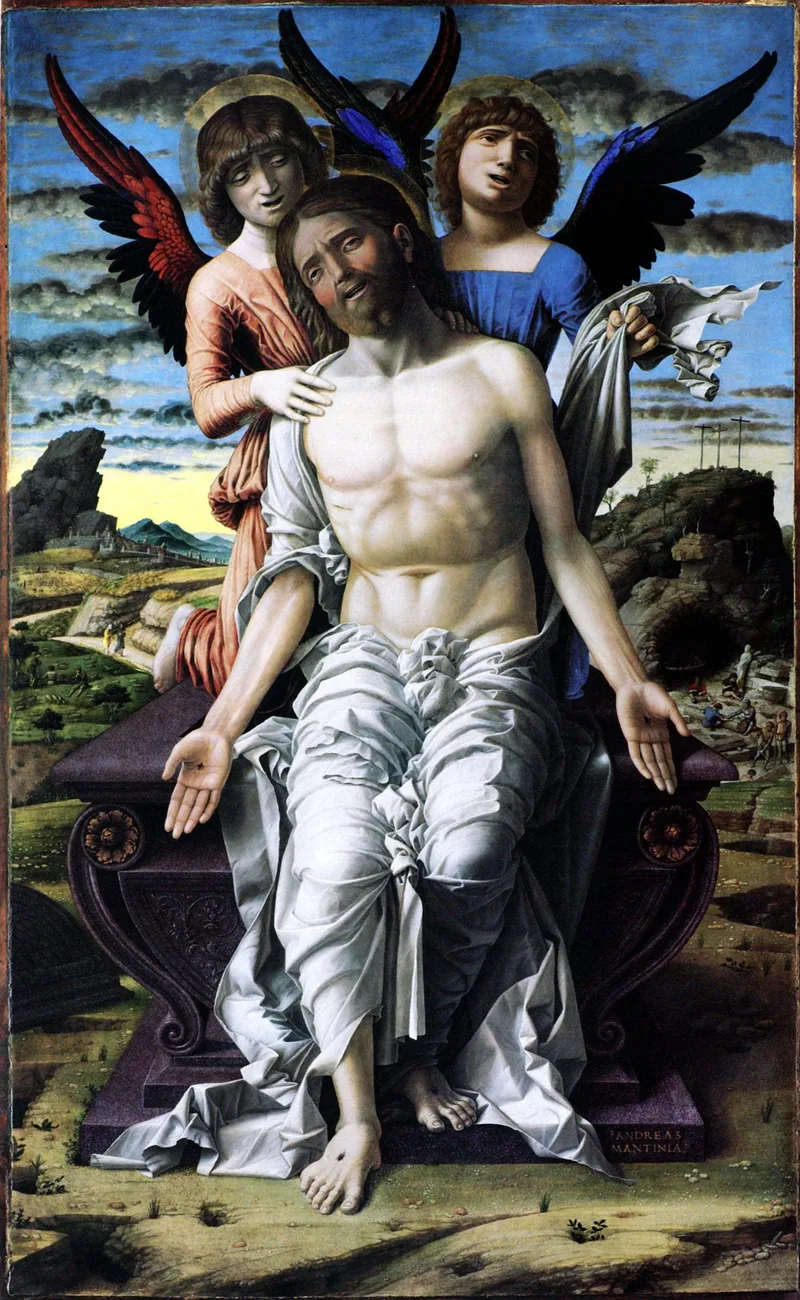
The Christ of Pity, or Man of Sorrows, is not a scene. It shows the dead or wounded Christ upright and conscious, supported by angels, in a state no narrative allows: the body is that of the entombment and the posture is that of a living figure. The type came out of Byzantine devotional imagery and was made precisely to be unplaceable in the sequence, so that a viewer could hold the death and the survival together.
Its relation to the cycle
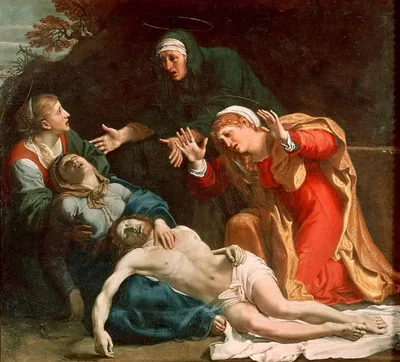
It stands between the Crucifixion and the Resurrection and belongs to neither. Cycles run deposition, lamentation, entombment; this image steps out of that line. The angels in the title are part of the convention — cherub and seraph are ranks, not characters from the gospel account, and their presence signals that the picture is doctrinal rather than reportorial.
The record
The catalogue gives Andrea Mantegna, 1490, and the National Gallery of Denmark in Copenhagen, at 78 by 48 centimetres — a narrow upright well under life size. The style is entered as Early Renaissance and the artist as Italian. The measured palette is recorded as neutral. The record holds no note on the commission or on how the panel reached Copenhagen.
Sources
3 references- Mantegna, Andrea, School of — Getty ULAN
Unknown artist
- Andrea Mantegna — Wikipedia
Andrea Mantegna (UK: , US: ; Italian: [anˈdrɛːa manˈteɲɲa]; c. 1431 – September 13, 1506) was an Italian Renaissance painter, a student of Roman archaeology, and the son-in-law of Jacopo Bellini. Like other artists of the time, Mantegna exp
- Mantegna, Andrea — Getty ULAN
Italian painter, ca. 1431-1506