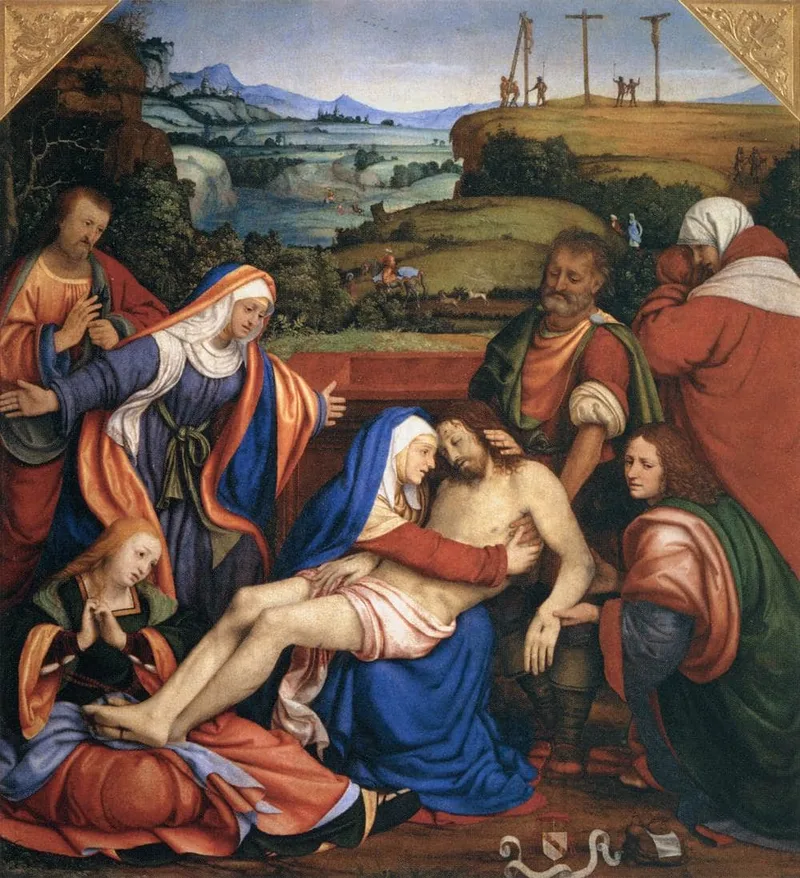
Hand-painted in oil
About this Artwork
The mourning, in Lombard terms
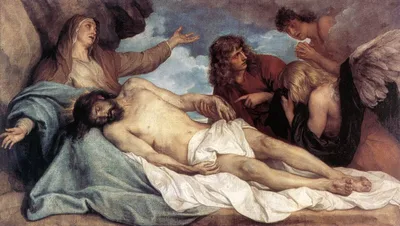
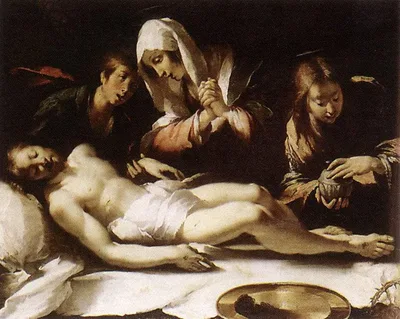
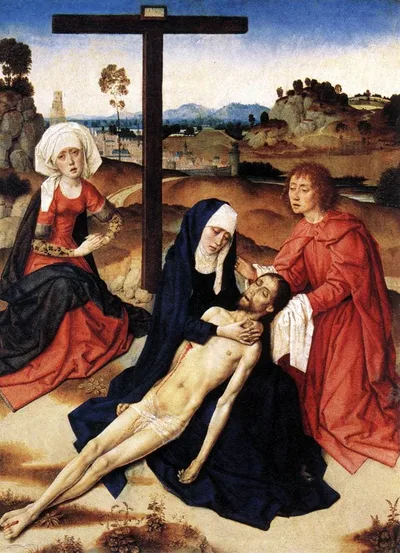
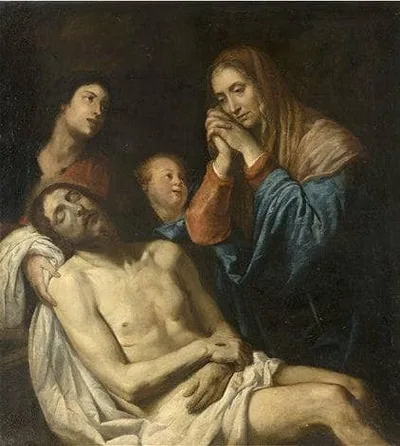
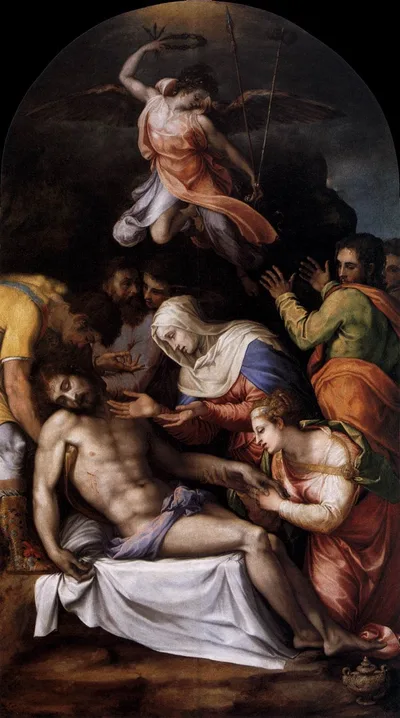
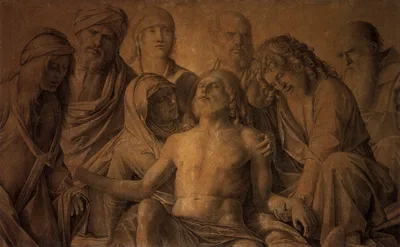
The Lamentation is the interval between the body coming down from the cross and the body going into the tomb. It is not a reported scene — the gospel accounts pass straight from one to the other — but a place painting opened up so that the mourners could be shown together. The episode is identified by that company rather than by any action.
Its position in the sequence
Immediately after the Deposition and immediately before the Entombment. In this catalogue the two flanking episodes are far rarer than the pause itself: four titles name a Deposition and five an Entombment, against twenty-five Lamentations. The mourning absorbed the attention that the two movements around it did not.
The catalogue entry
The record enters the work under Andrea Solario, dated 1507, in the Louvre, Paris, France — one of fifteen works in this catalogue held there. It measures 175 x 161.5 cm, close to square and at altar scale. The style is given as High Renaissance and the artist as Italian; the subject fields class the work as a group composition and as religious. The measured palette reads as ochre. The entry says nothing about the panel's support, its commission, or its passage into a French collection, so nothing of that is claimed.
Sources
4 references- Solario, Andrea — Getty ULAN
Italian artist, ca.1473-1524
- Andrea Solari — Wikipedia
Andrea Solari (also Solario) (c. 1465–1524) was an Italian Renaissance painter of the Milanese school. He was initially named Andre del Gobbo, but more confusingly as Andrea del Bartolo a name shared with two other Italian painters, the 14t
- Lamentation over the Dead Christ — Wikidata
description: painting by Andrea Solari; inception: 1510; dimensions: 178 × 163 cm; collection: Department of Paintings of the Louvre
- Andrea Solario - Lamentation over the Dead Christ - WGA21603 — Wikimedia Commons
High-resolution image of the work, hosted on Wikimedia Commons.