Hand-painted in oil
About this Artwork
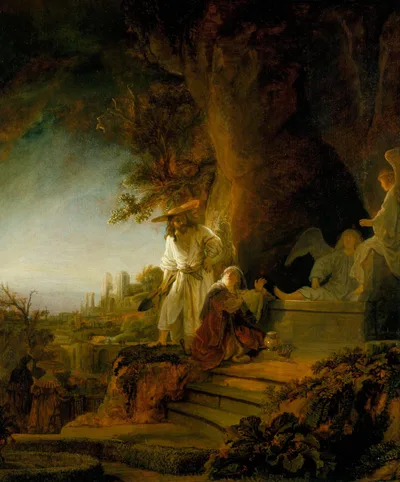
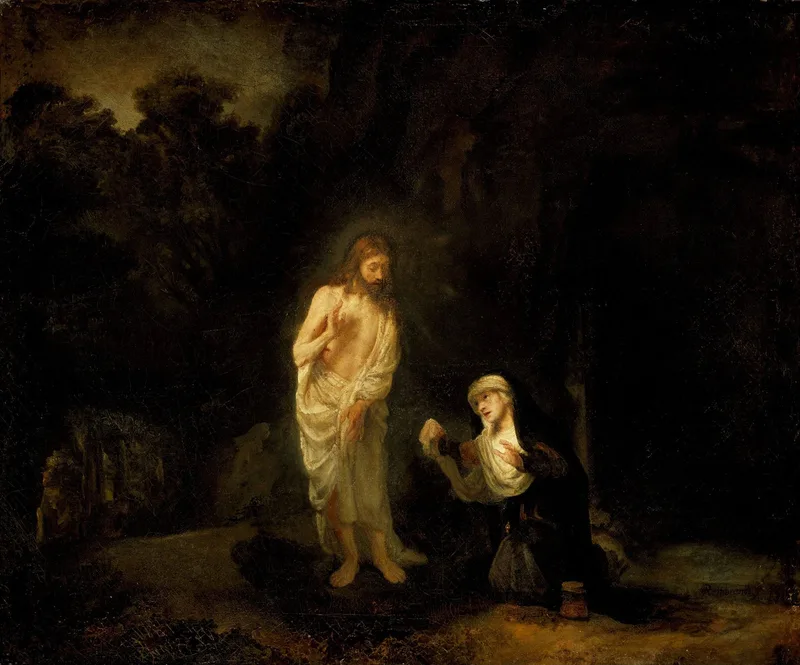
Noli me tangere
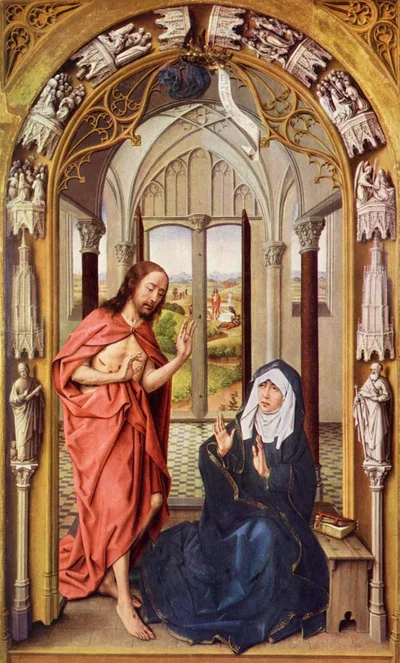
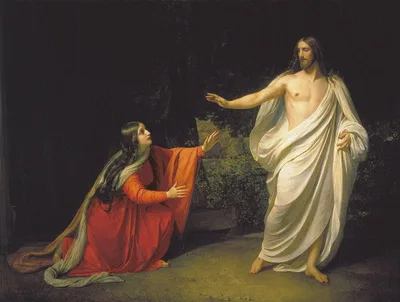
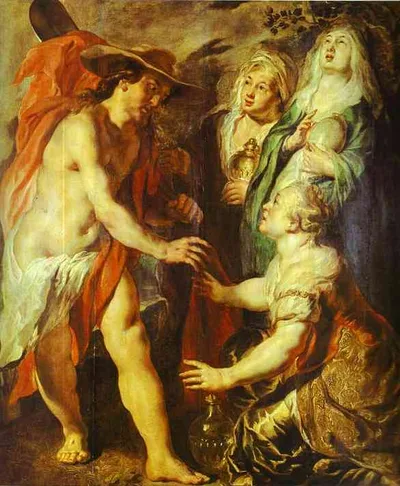
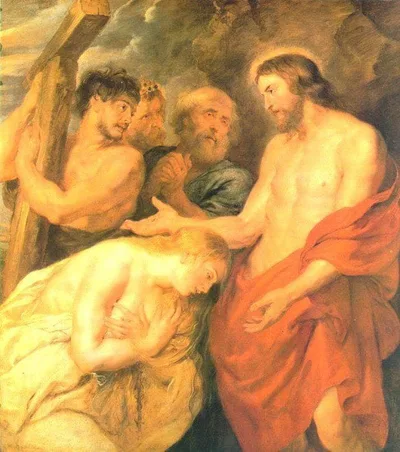
The twentieth chapter of John gives the first appearance after the Resurrection. Mary Magdalene, weeping at the empty tomb, takes the figure she sees for the gardener; he says her name, she recognises him, and he tells her not to hold on to him. The Latin of that line supplies the title used in this record. The iconography follows the mistake in the text: Christ is often shown with a gardener's tools, in a garden, at first light.
Where it falls in the cycle
Immediately after the Resurrection and before every other appearance — to the disciples at Emmaus, to the eleven in the upper room, to Thomas. It is the first scene of the risen life and the only one in which a single person is the whole audience.
The catalogue entry
The record names Rembrandt as the artist and 1651 as the date of creation, with the painting at the Herzog Anton Ulrich Museum, Braunschweig, Germany. No dimensions are entered. The style is classed both as Baroque and as tenebrism, and the artist as Dutch; the subject fields include a male figure subject alongside the religious classification. The measured palette reads as brown.
Sources
6 references- Rembrandt — Wikipedia
Rembrandt Harmenszoon van Rijn (15 July 1606 – 4 October 1669), known mononymously as Rembrandt, was a Dutch Golden Age painter, printmaker, and draughtsman. He is generally considered one of the greatest visual artists in the history of We
- Rembrandt van Rijn — Getty ULAN
Dutch painter, printmaker, 1606-1669
- Christ Appearing to Mary Magdalene, ‘Noli me tangere’ — Wikidata
description: painting by Rembrandt; inception: 1651; dimensions: 65 × 79 cm; collection: Herzog Anton Ulrich Museum
- rkd.nl — record for "Christ Appearing to Mary Magdalene, ‘Noli me tangere’"
Primary source record for this work (rkd.nl).
- Noli me tangere (Correggio) — Wikipedia
Noli me tangere, also known as Christ Appearing to Mary Magdalene in the Garden, is a c. 1525 painting by Correggio which depicts the noli me tangere interaction between Jesus and Mary Magdalene shortly after the Resurrection. It is current
- Rembrandt Christ Appearing to Mary Magdalene, ‘Noli me tangere’ — Wikimedia Commons
High-resolution image of the work, hosted on Wikimedia Commons.