Hand-painted in oil
About this Artwork
The reduced Calvary
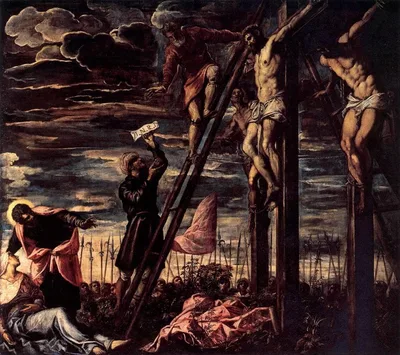
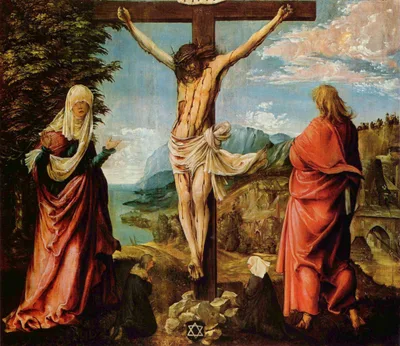
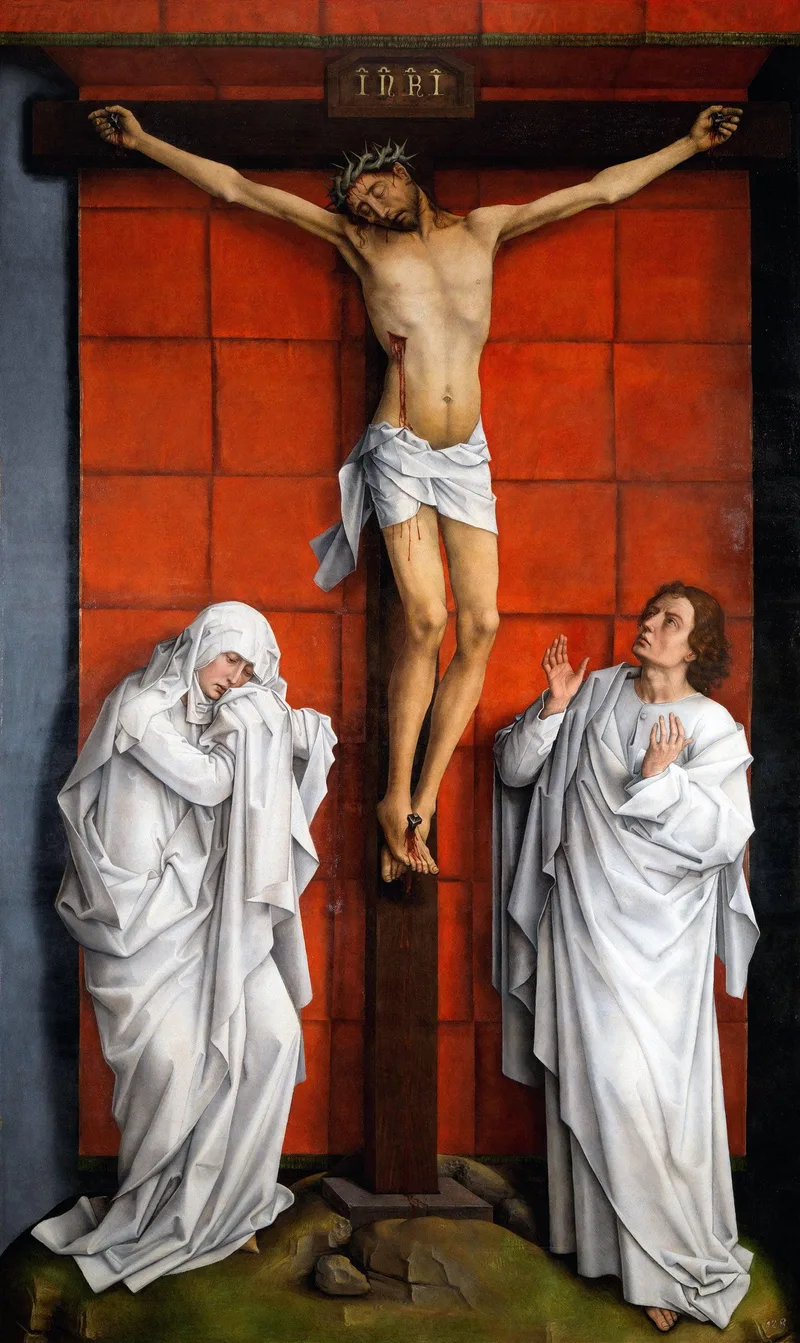
The Crucifixion is the fixed centre of the cycle. The version this title names is the three-figure one: the cross, with the mother on one side and John on the other. It comes from John's account, where those two are addressed from the cross, and it strips away the soldiers, the thieves and the crowd that the other gospels supply. What remains is the episode reduced to the people who are spoken to.
Where it falls in the sequence
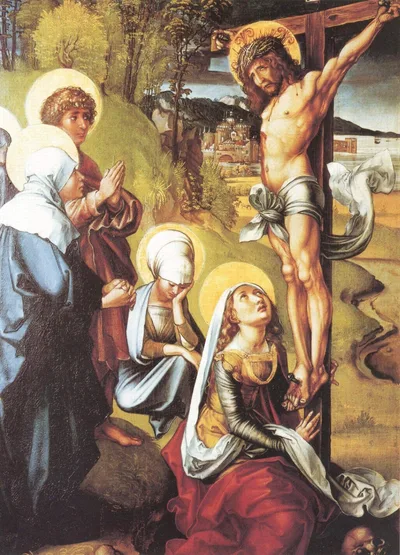
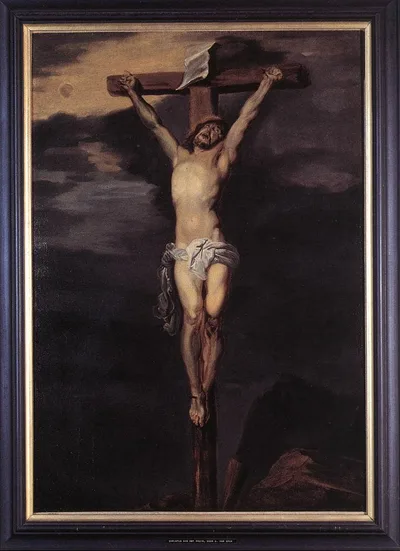
After the road to Calvary and before the Deposition. Seventeen titles in this catalogue place Christ on the cross, and they divide between the crowded hill and this austere three-figure arrangement, which northern painting of the fifteenth century preferred because it turns a public execution into an address.
The catalogue entry
The record gives Rogier van der Weyden, 1460, and El Escorial, Madrid, Spain — a monastery and palace rather than a museum, which is what a work still held by the institution it entered looks like in a record. It measures 325 x 192 cm, upright and very large. The style is entered as Northern Renaissance and the artist as Flemish; the subject fields class the work as religious. The measured palette reads as brown. The entry says nothing about how the panel came to the Escorial.
Sources
1 references- Weyden, Rogier Van Der, School of — Getty ULAN
Unknown artist