Hand-painted in oil
About this Artwork
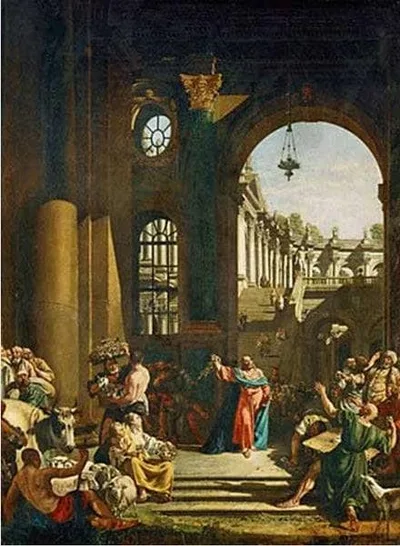
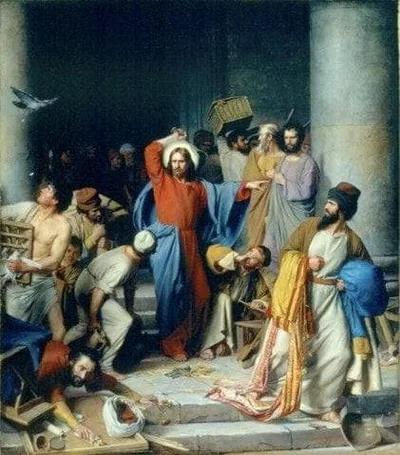
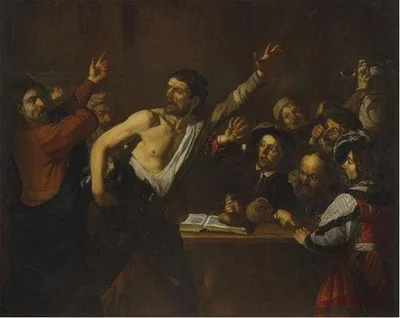
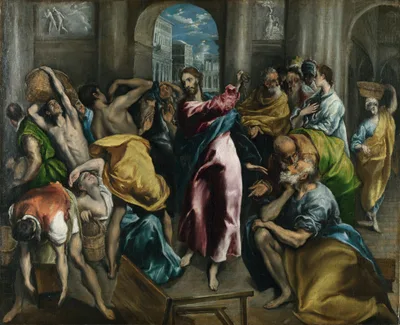
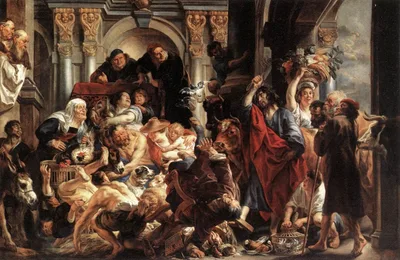
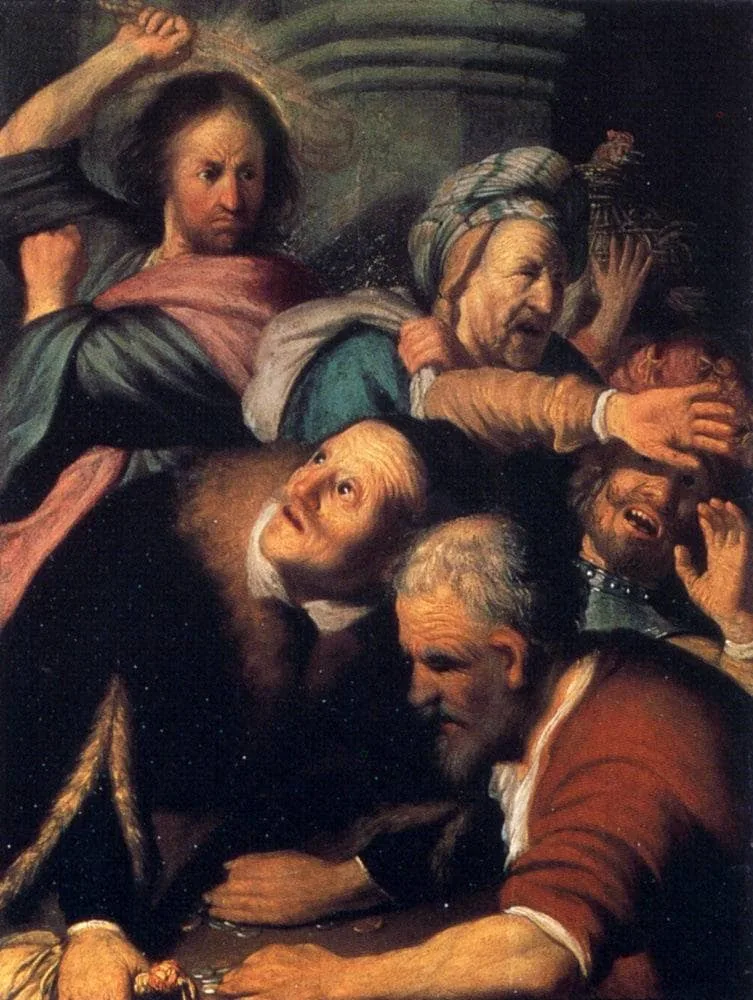
The cleansing of the Temple
The episode is one of the few in which Christ acts by force: he overturns the tables of the money changers and drives out those selling animals for sacrifice. John places it at the beginning of the ministry; the synoptic gospels place it in the last week, after the entry into Jerusalem. The disagreement matters for a cycle, because the same scene can be either an opening statement or the act that sets the arrest in motion.
Where it falls, depending on the text
Early, if John is followed; days before the Passion, if the others are. A cycle that runs in order has to choose. The record here names the episode without settling the question, and this page does not settle it either.
The record
The catalogue names Rembrandt, dates the work to 1626 — the earliest of the ten Rembrandt entries in this catalogue — and gives the location only as a private collection, one of twenty-five entries here recorded that way. It measures 33 by 43 centimetres, a small horizontal. The style is entered as Baroque and the artist as Dutch. The subject fields on this entry are inconsistent with the title and are not repeated. The measured palette reads as red.
Sources
3 references- Rembrandt — Wikipedia
Rembrandt Harmenszoon van Rijn (15 July 1606 – 4 October 1669), known mononymously as Rembrandt, was a Dutch Golden Age painter, printmaker, and draughtsman. He is generally considered one of the greatest visual artists in the history of We
- Rembrandt van Rijn — Getty ULAN
Dutch painter, printmaker, 1606-1669
- Christ driving the moneychangers from the Temple, Rembrandt van Rijn, 1624-1625, oil on oak panel, pre-1930 state — Wikimedia Commons
High-resolution image of the work, hosted on Wikimedia Commons.