Hand-painted in oil
About this Artwork
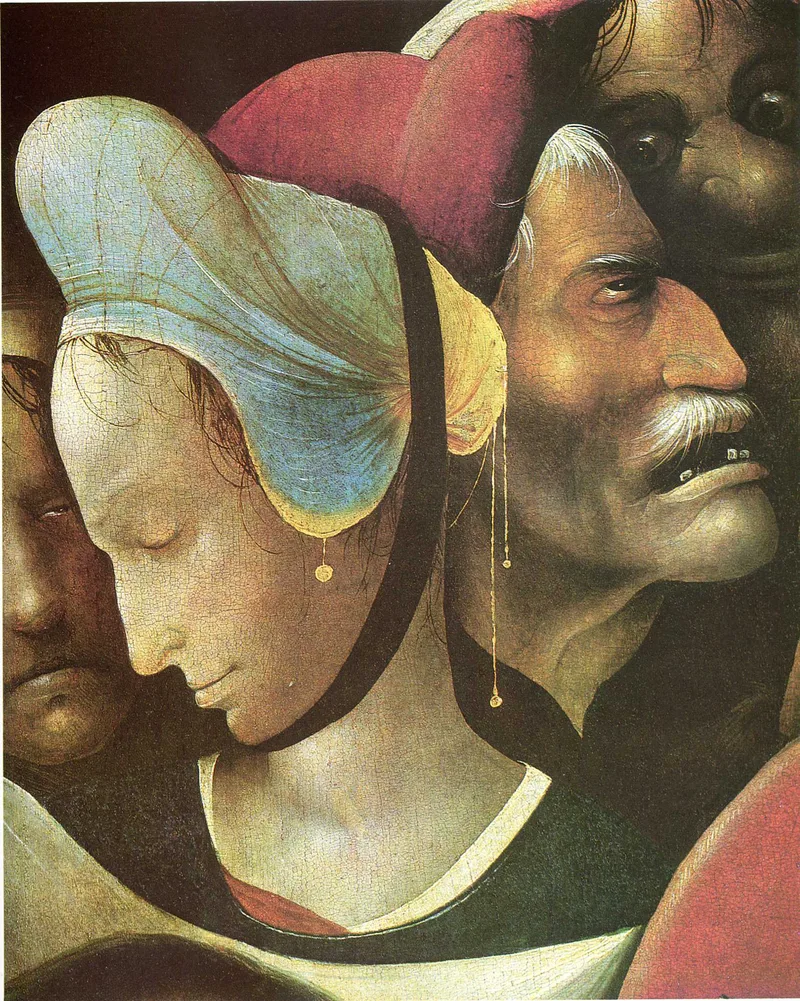
The road to Calvary, and Veronica
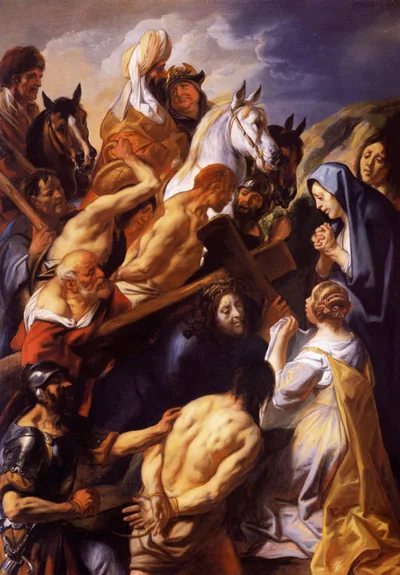
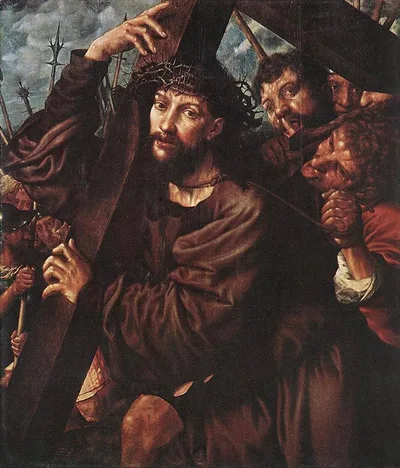
The episode is the carrying of the cross. The figure named in this title, Veronica, does not appear in the gospels; she belongs to later devotional tradition, in which a woman wipes the face of Christ on the road and the cloth retains the image. That tradition became the sixth station of the Way of the Cross, and painting treats the encounter as an interruption in the procession — the only moment of relief in the walk to the execution.
Its place in the Passion
After the sentence and before the Crucifixion, on the road out of the city. Cycles that follow the stations rather than the gospel text alone place Veronica between the falls, which is why she is common in Northern painting and absent from narrative sequences that stay strictly with the four gospels.
What the catalogue holds
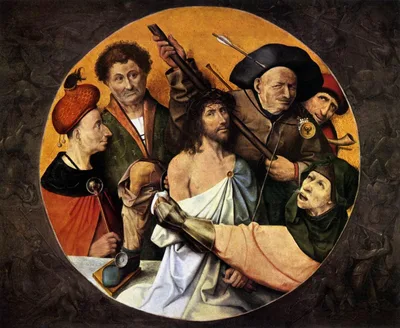
The record gives Hieronymus Bosch as the artist and 1516 as the date of creation, with the painting at the Museum of Fine Arts, Ghent, Belgium. No dimensions are entered. The style is classed as Northern Renaissance and the artist as Dutch, and the subject fields include a female figure subject alongside the religious classifications. The measured palette reads as ochre and yellow.
Sources
3 references- Hieronymus Bosch — Wikipedia
Hieronymus Bosch (; Dutch: [ɦijeːˈroːnimʏz ˈbɔs] ; born Jheronimus van Aken [jeːˈroːnimʏs fɑn ˈaːkə(n)]; c. 1450 – 9 August 1516) was a Dutch painter from Brabant. He is one of the most notable representatives of the Early Netherlandish pai
- Bosch, Hieronymus — Getty ULAN
Netherlandish painter, draftsman, ca. 1450-1516
- Christ Carrying the Cross (Bosch, Ghent) — Wikipedia
Christ Carrying the Cross (also referred to as Christ Bearing the Cross) is a painting attributed to a follower of Hieronymus Bosch. It was painted in the early 16th century, presumably between 1510 and 1535. The work is housed in the Museu