Hand-painted in oil
About this Artwork
Two panels, two ends of the story
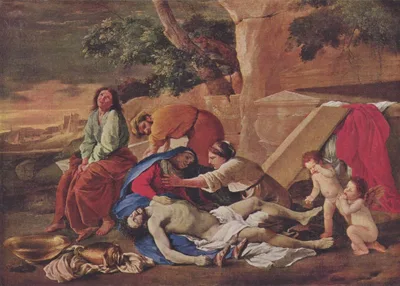
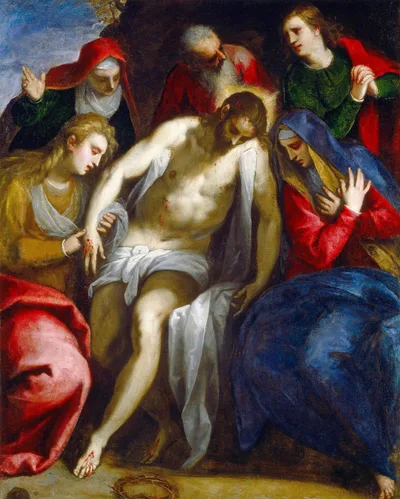
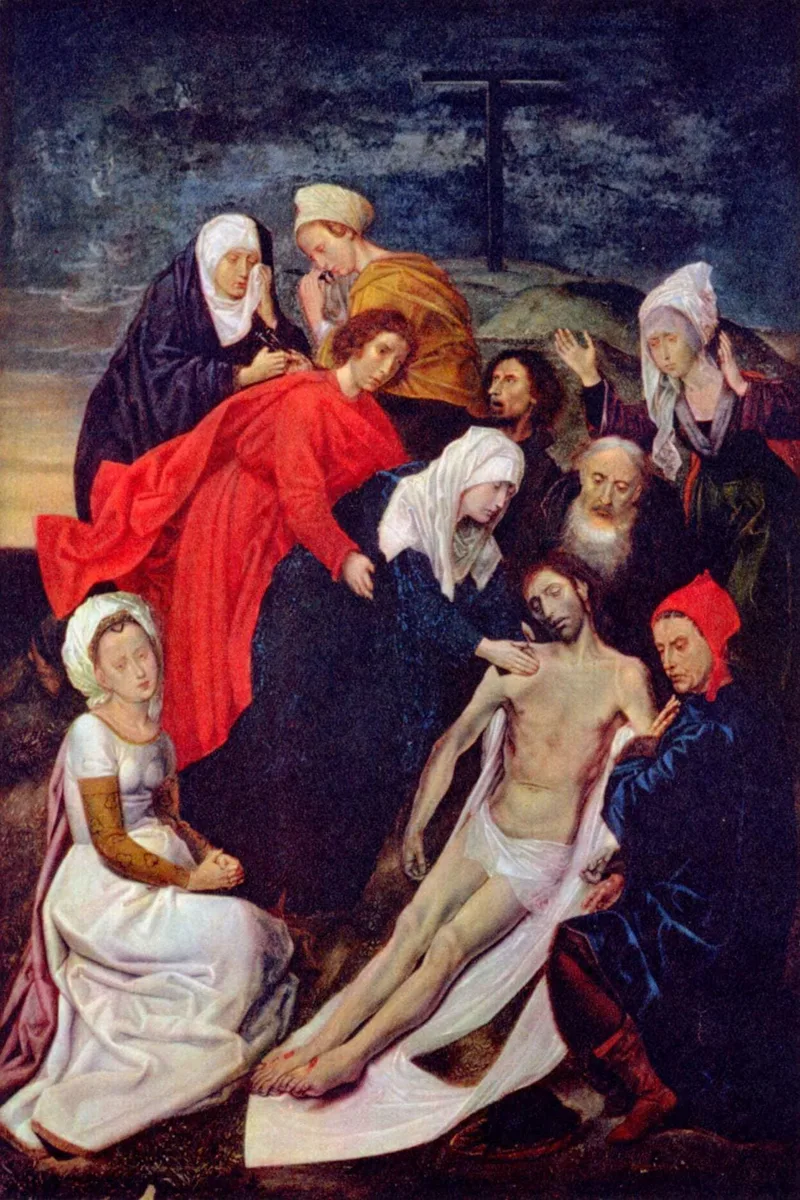
The recorded title describes a diptych pairing the Fall of Man with the Redemption, and names the Lamentation as the second subject. That pairing is a fixed device: the first human disobedience on one wing, the dead Christ on the other, so that the beginning of the trouble and its remedy are seen at once. The device works only because the two panels are hinged together.
Where it falls in the cycle
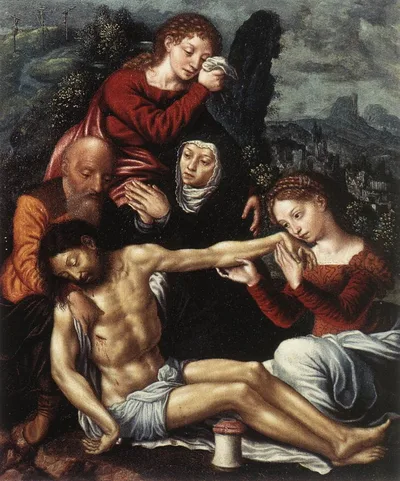
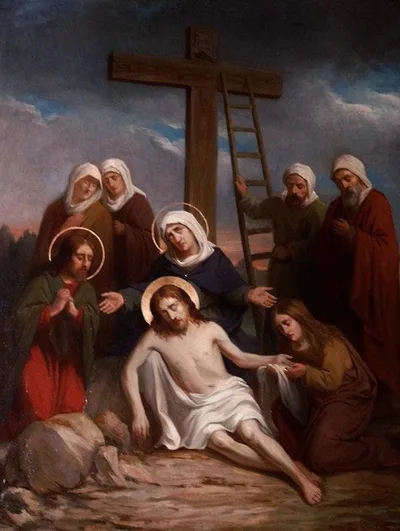
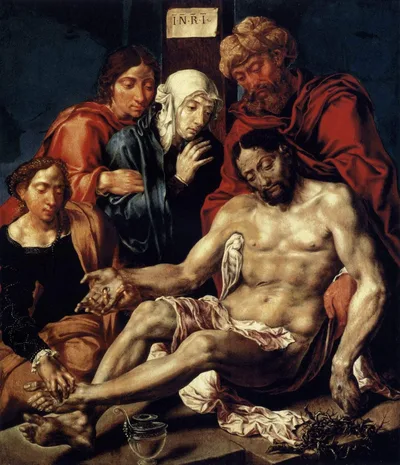
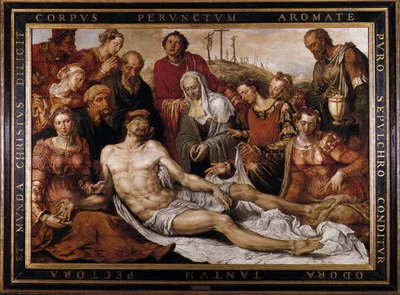
The Christ half sits at the same place every Lamentation does — after the Deposition, before the Entombment. What the diptych adds is a second timeline. Read as narrative, the left panel is thousands of years earlier; read as doctrine, the two are a single argument. Twenty-five titles in this catalogue name a Lamentation, and few of them carry that second half with them.
The catalogue entry
The record names Hugo van der Goes, dates the work to 1480, and places it in the Kunsthistorisches Museum, Vienna, Austria — one of fifteen works in this catalogue held there. It measures 34.4 x 22.8 cm, very small and upright, the scale of an object opened in the hands rather than hung. The style is entered as Northern Renaissance and the artist as Flemish. The measured palette reads as red.
Sources
3 references- Goes, Hugo van der — Getty ULAN
South Netherlandish painter, ca. 1440-1482
- Hugo van der Goes — Wikipedia
Hugo van der Goes (c. 1430/1440 – 1482) was a Flemish painter who was one of the most significant and original Early Netherlandish painters of the late 15th century. Van der Goes was an important painter of altarpieces as well as portraits.
- Hugo van der Goes - The Fall of Man and The Lamentation - Google Art Project — Wikimedia Commons
High-resolution image of the work, hosted on Wikimedia Commons.