Hand-painted in oil
About this Artwork
The body comes down
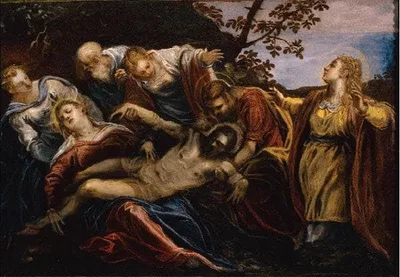
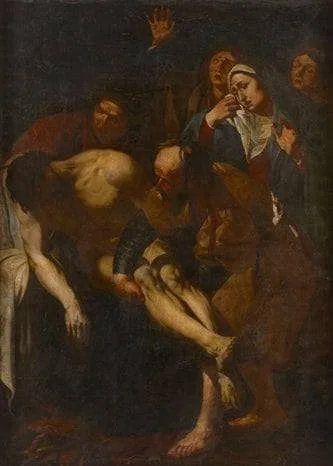
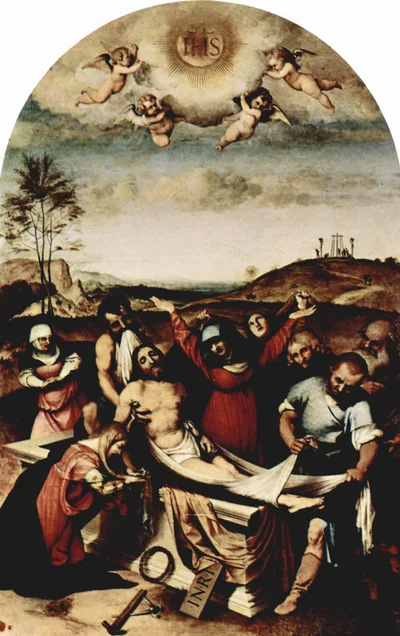
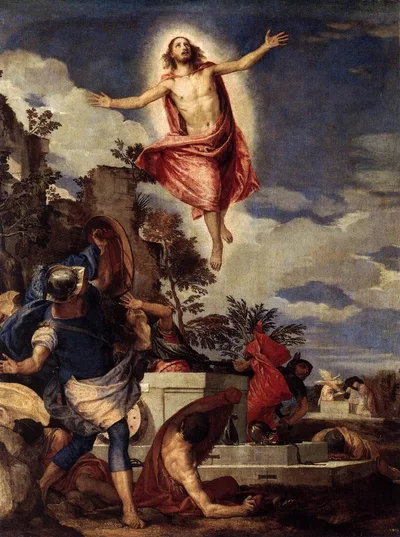
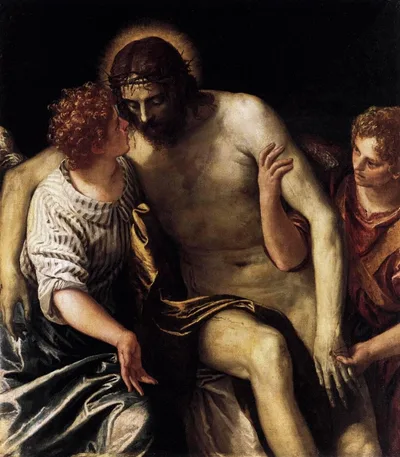
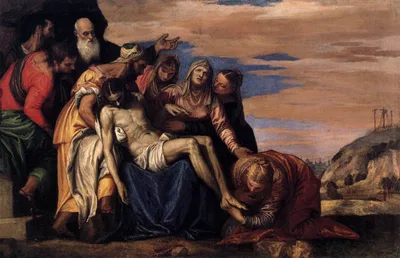
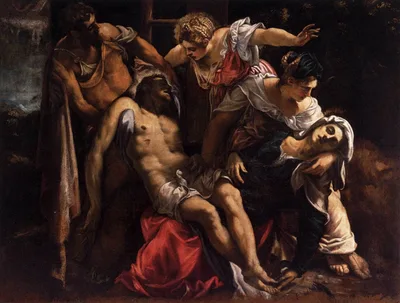
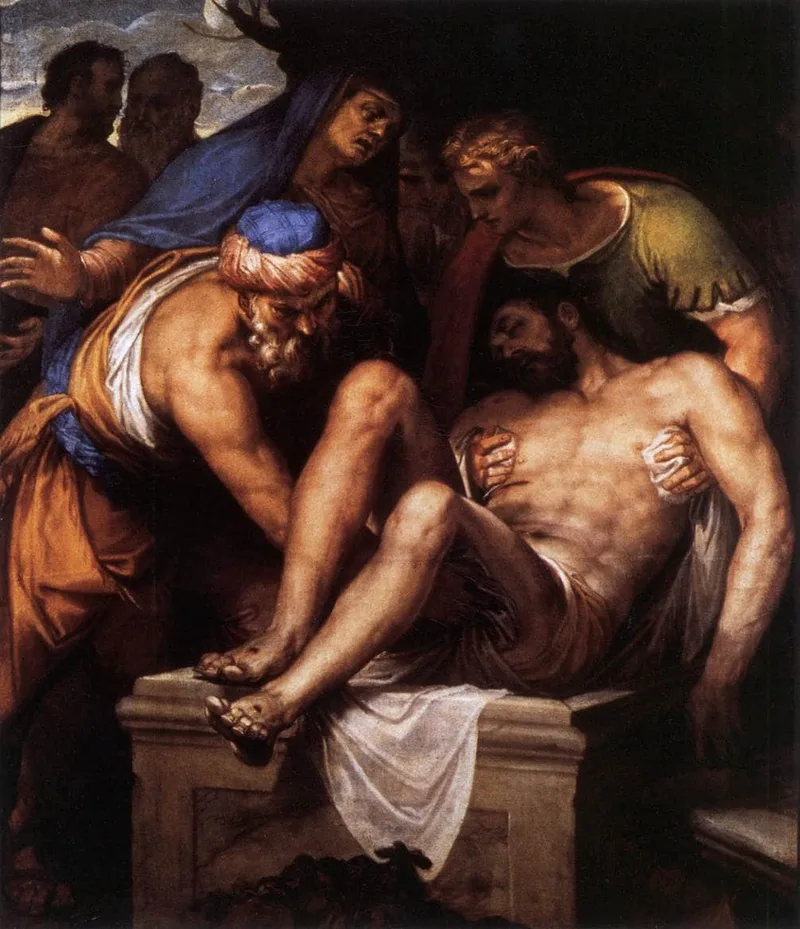
The Deposition is the taking of the body from the cross. All four gospels have Joseph of Arimathea ask for it and take it away; none describes the descent itself, so the ladders, the cloth and the helpers are the invention of painting rather than of the text. The subject is defined by a single direction of movement — downward — and that is what separates it from the Lamentation that follows.
Where it falls in the cycle
Directly after the Crucifixion, directly before the mourning and the burial. It is rare in this catalogue: four titles name a Deposition, against twenty-five that name a Lamentation. The tradition preferred the stillness after the movement to the movement itself.
The catalogue entry
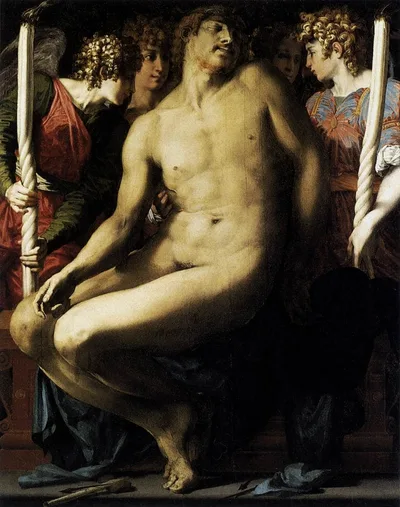
The record names Paolo Veronese, dates the canvas to 1549, and enters the location as Private Collection, without a city or a country. It measures 213 x 173 cm, upright and large — the scale of a picture made for a wall, whatever wall it now hangs on. The style is entered as Mannerism Late Renaissance and the artist as Italian; the subject fields class the work as a group composition and as religious. The measured palette reads as brown. Because the location field gives no institution, nothing can be said about where the canvas is, and nothing is.
Sources
4 references- Caliari, Carlo — Getty ULAN
Italian painter, 1570-1596
- Paolo Veronese — Wikipedia
Paolo Caliari (1528 – 19 April 1588), known as Paolo Veronese ( VERR-ə-NAY-zay, -zee, US also -see; Italian: [ˈpaːolo veroˈneːze, -eːse]), was an Italian Renaissance painter based in Venice, known for extremely large history paintings of
- Veronese, Paolo — Getty ULAN
Italian painter, 1528-1588
- Paolo Veronese - Deposition of Christ - WGA24762 — Wikimedia Commons
High-resolution image of the work, hosted on Wikimedia Commons.