Hand-painted in oil
About this Artwork
Between the cross and the tomb
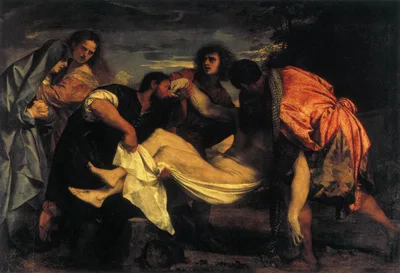
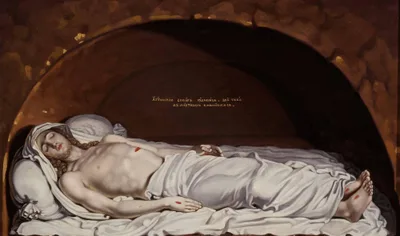
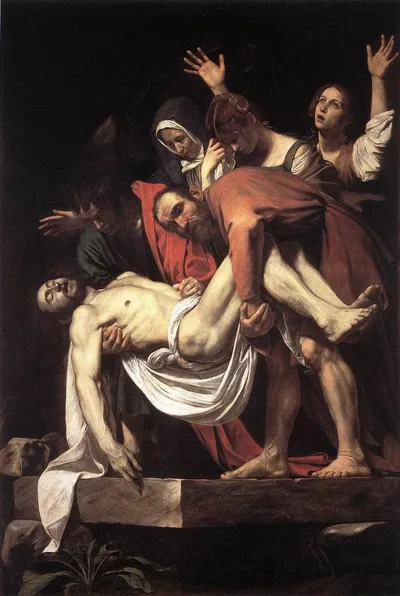
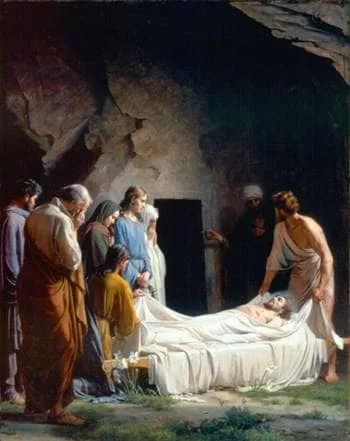
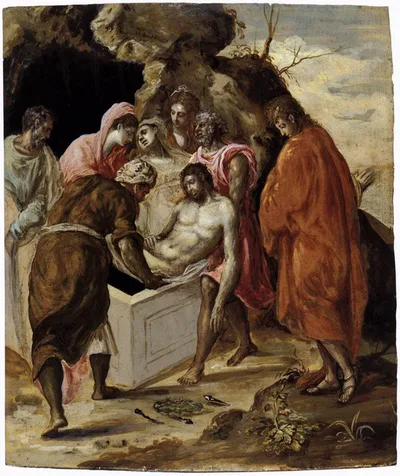
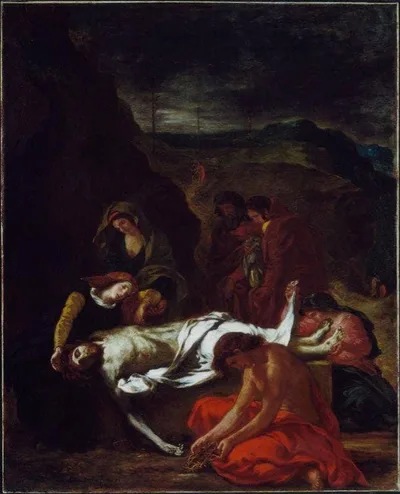
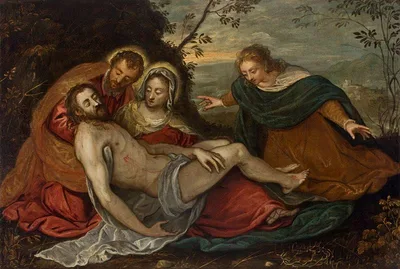
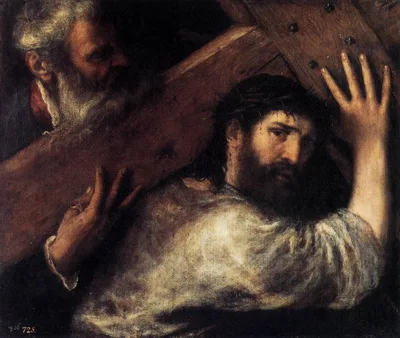
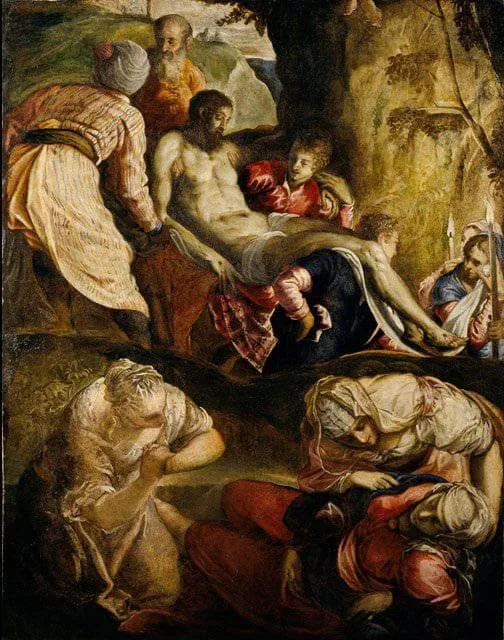
The bearing of the body to the sepulchre is one of three closely spaced subjects that painting separated out of a single verse. The gospels say that Joseph of Arimathea took the body, wrapped it, and laid it in a new tomb. Out of that came the Deposition, the taking down; the Lamentation, the pause with the mourners; and the Entombment, which includes the carrying. This entry is titled for the carrying.
Its position in the cycle
Last of the Passion scenes. After it the narrative stops until the empty tomb is found at dawn. Sixteen titles in this catalogue carry the word tomb, entombment or burial, and thirty-seven name a lamentation, a pietà, a dead Christ or a corpse. The interval between the cross and the empty tomb is the densest stretch of the whole cycle in a painting collection, because it is the stretch where devotion, not narrative, sets the number of images.
The record
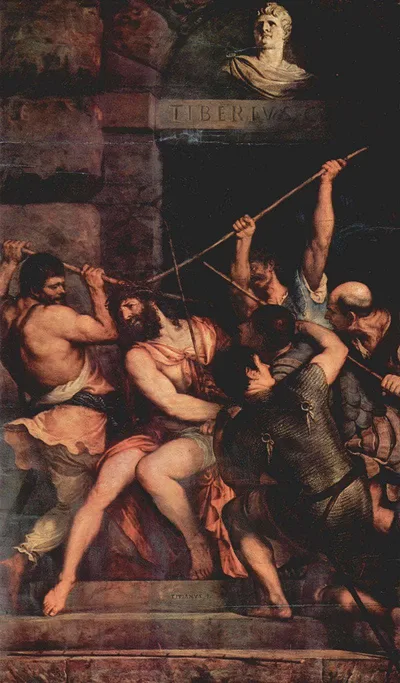
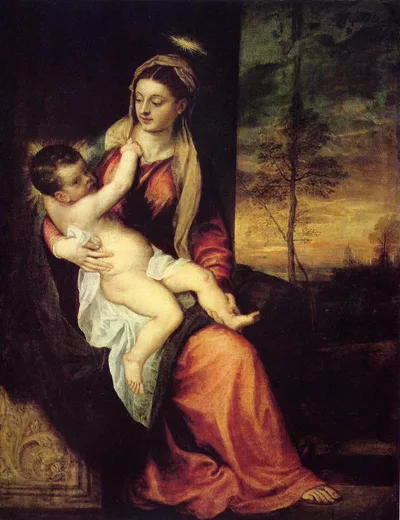
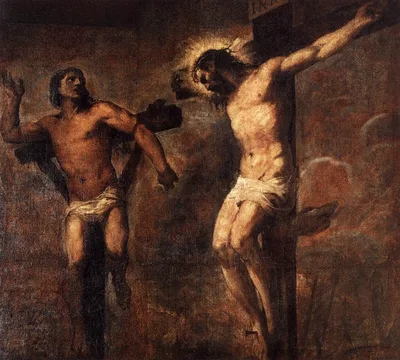
The catalogue gives Tintoretto, 1565, and the Scottish National Gallery in Edinburgh, at 164 by 128 centimetres. The style is entered as Mannerism and late Renaissance and the artist as Italian; the subject fields class the work as a group composition and as religious. The measured palette reads as brown. No commission or earlier location is recorded.
Sources
1 references- Tintoretto and Domenico Tintoretto — Getty ULAN
artist, active 20th century