Hand-painted in oil
About this Artwork
The civil trial
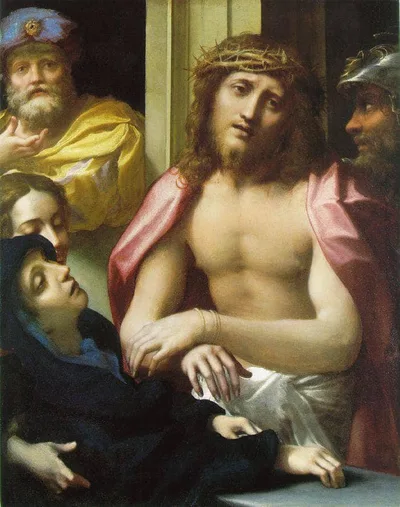
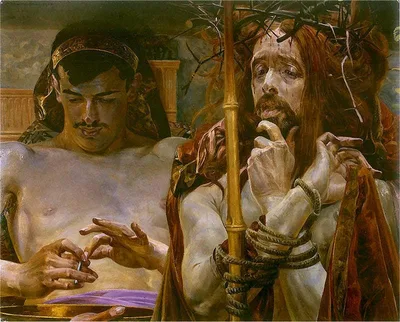
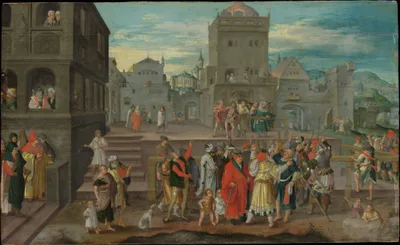
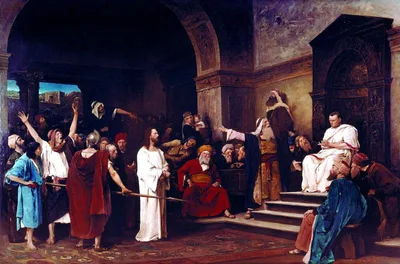
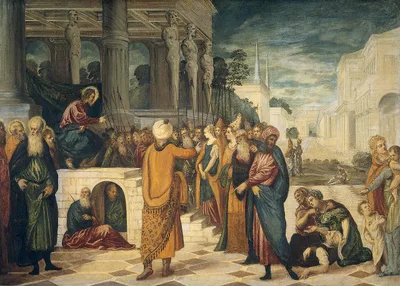
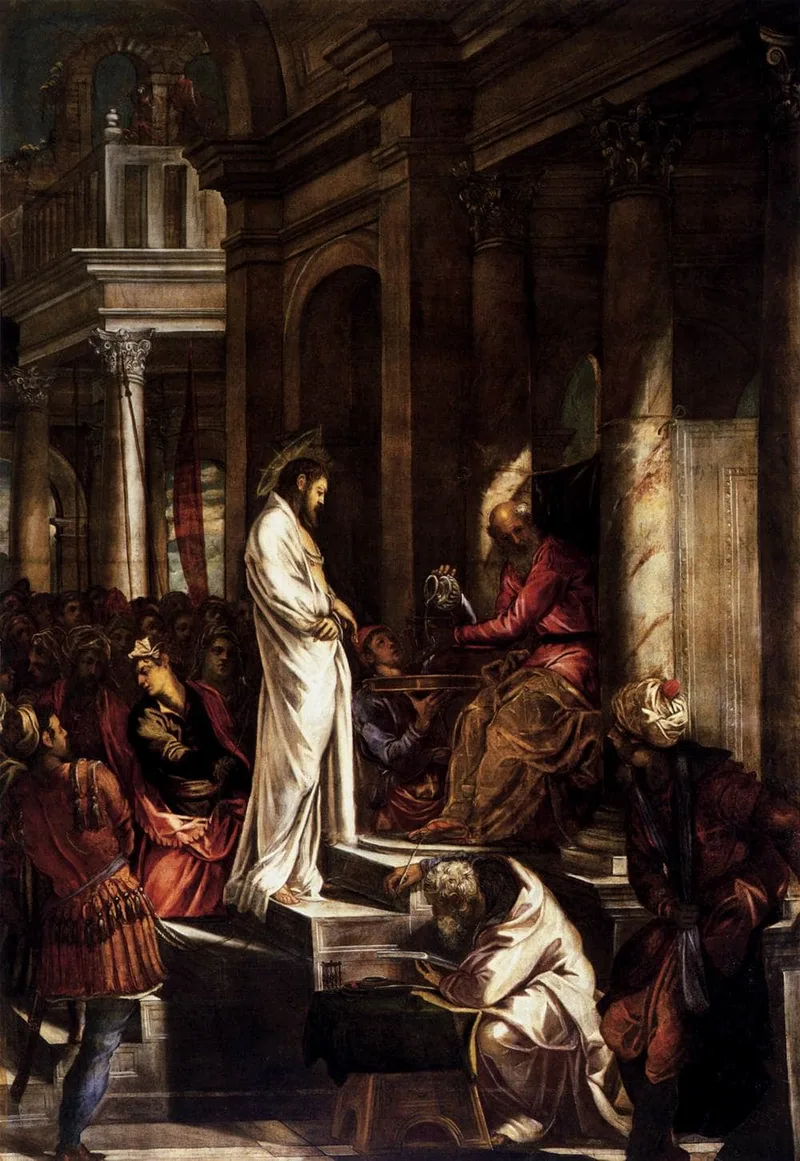
After the night before the high priest, the prisoner is taken to the Roman governor, because the charge has to be made a civil one for an execution to follow. The gospels differ on how much is said. What painting fixed is the arrangement: a seated official, a standing figure who mostly does not answer, and the apparatus of a court between them.
Where it falls in the sequence
Between the arrest and the flagellation, on the Friday morning. Five titles in this catalogue name Pilate, which makes the trial one of the better-represented episodes of the Passion here, and its outcome — the sentence — is what turns the narrative from a hearing into an execution.
The catalogue entry
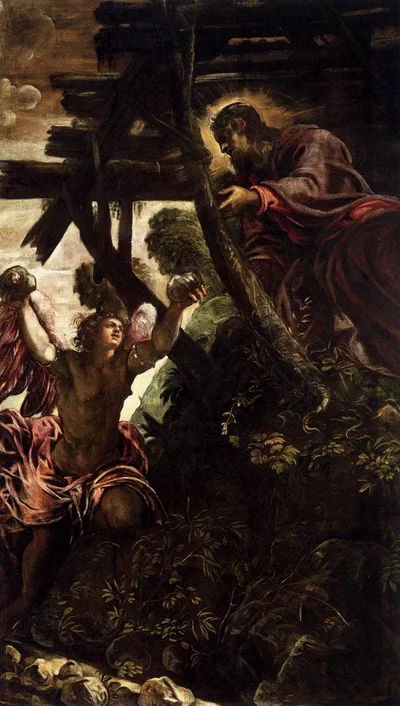
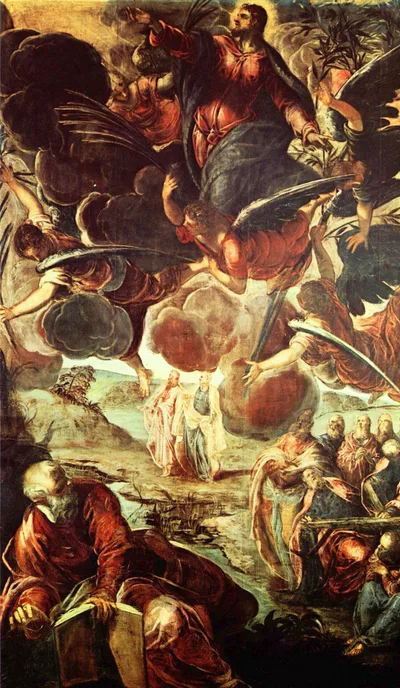
The record names Tintoretto, dates the canvas to 1567, and gives the Scuola Grande di San Rocco, Venice, Italy, as the location — a confraternity building rather than a museum, which is what a decoration still in the place it was made for looks like in a record. The measurements match that: 515 x 380 cm, upright and architectural in scale. The style is entered as Mannerism Late Renaissance and the artist as Italian; the subject fields class the work as a group composition and as religious. The measured palette reads as brown.
Sources
1 references- Tintoretto and Domenico Tintoretto — Getty ULAN
artist, active 20th century