Hand-painted in oil
About this Artwork
The Nativity in the eighteenth century
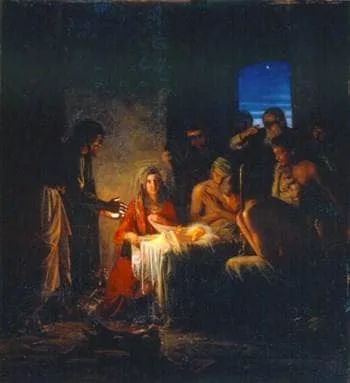
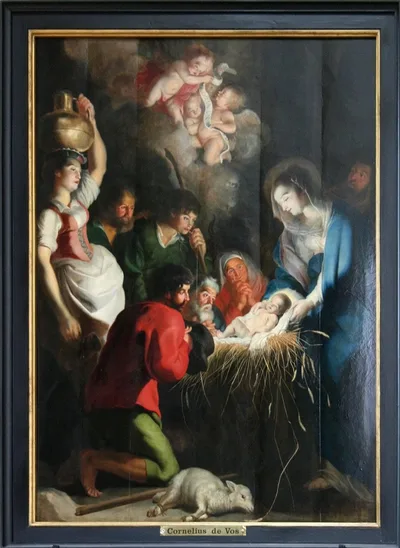
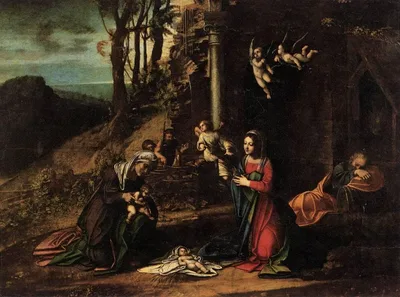
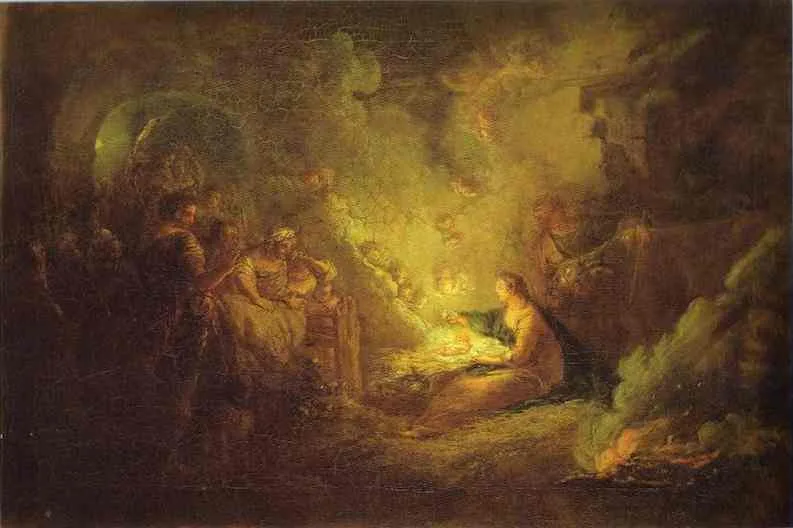
The subject is the birth at Bethlehem, given in the second chapter of Luke: the child laid in a manger because there was no room at the inn, and the shepherds arriving as the first witnesses. The episode opens the cycle; every later scene, from the flight into Egypt to the Passion, depends on it.
What the date changes
The record dates this treatment to 1745, which places it more than two centuries after most of the Nativities in this catalogue. Of the 395 dated entries here the years run from 1424 to 1945, and forty-four are dated 1500 or earlier — the Nativity is one of the subjects that stayed in production across that whole span. By the middle of the eighteenth century the scene was no longer principally an altarpiece subject; the recorded size, 48.5 by 72 centimetres, is a horizontal cabinet format rather than an altar one.
The catalogue entry
The record names Antoine Pesne, gives the Hermitage Museum in Saint Petersburg as the location, enters the style as Rococo and the artist as German. The subject fields file the work under landscape and forest alongside religion. The measured palette reads as brown. No patron, commission, or route to the Hermitage appears in the entry.
Sources
1 references- Pesne, Antoine — Getty ULAN
French painter, 1683-1757, active in Prussia