Hand-painted in oil
About this Artwork
The pause between cross and tomb
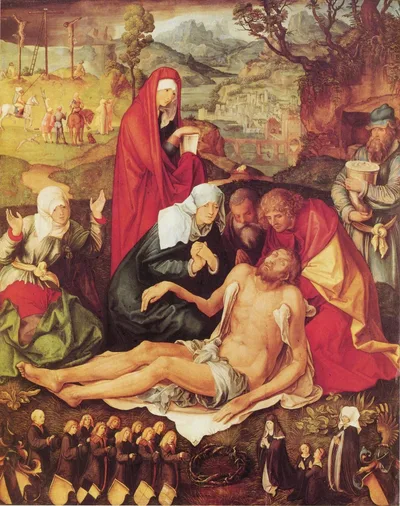
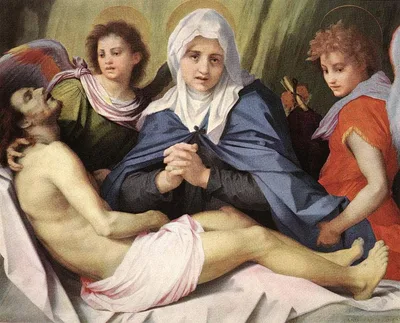
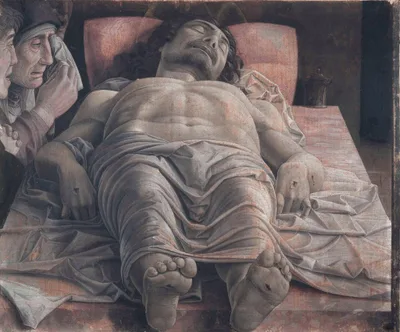
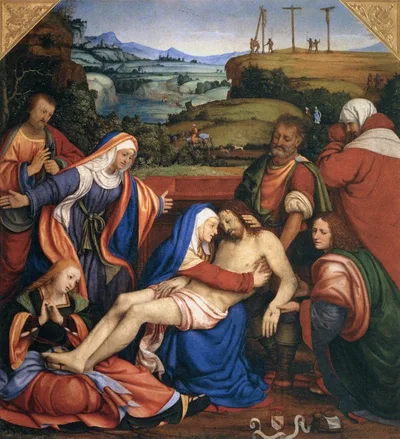
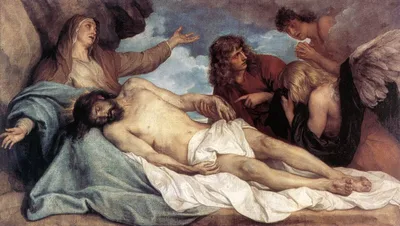
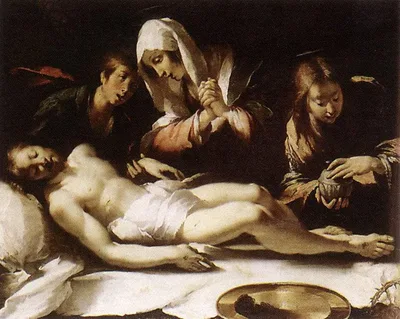
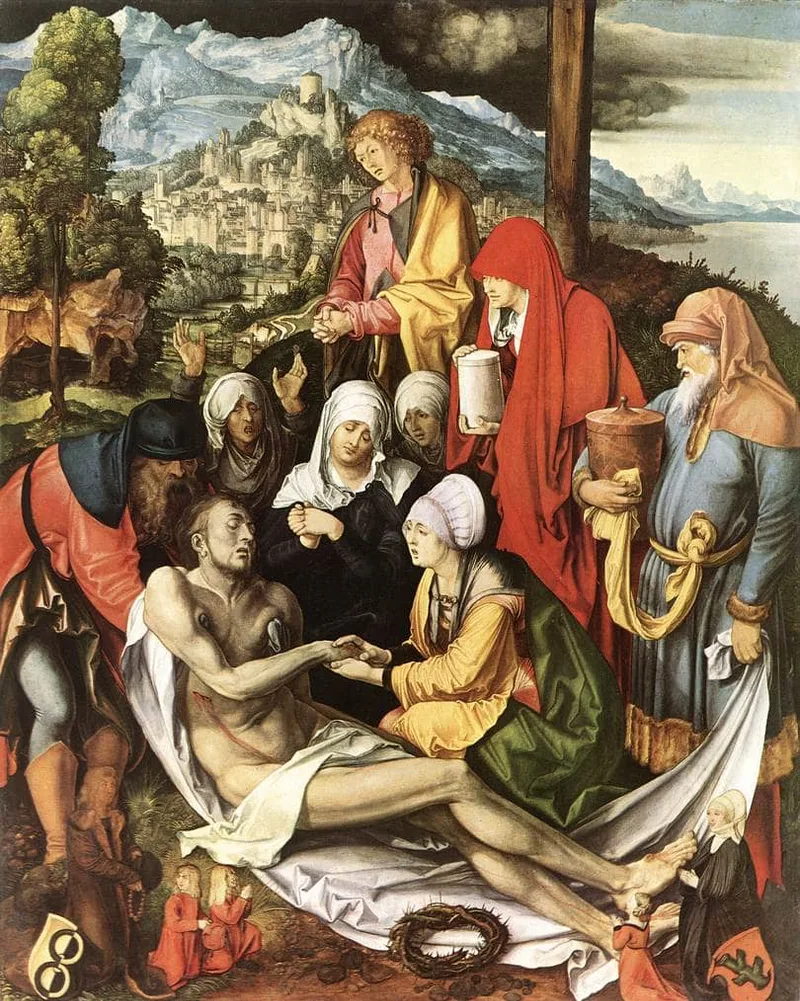
The Lamentation is not narrated. The gospels say only that the body was taken down, wrapped, and laid in a tomb; the interval in which the mourners hold it comes from devotional literature and from the practical needs of a cycle, which requires a scene between the Crucifixion and the burial. It became one of the fixed Passion subjects, and it is the one in which nothing happens by design.
Where it falls
Between the deposition and the entombment. Thirty-seven titles in this catalogue name a lamentation, a pietà, a dead Christ or a corpse, which makes this interval — a few hours in the narrative — the most heavily represented stretch of the whole life.
The record
The catalogue names Albrecht Durer, dates the work to 1503, and gives the Alte Pinakothek in Munich. It measures 121 by 151 centimetres, a horizontal at close to life size, which for a subject built around a body laid out is the format that fits. The style is entered as Northern Renaissance and the artist as German; the subject fields class the work as a group composition and as religious. The measured palette reads as ochre and yellow. The record carries no note on the commission, and none is supplied here.
Sources
3 references- Dürer, Albrecht — Getty ULAN
German printmaker and painter, 1471-1528
- Albrecht Dürer — Wikipedia
Albrecht Dürer ( DURE-ər, German: [ˈalbʁɛçt ˈdyːʁɐ]; 21 May 1471 – 6 April 1528), sometimes spelled in English as Durer or Duerer, was a German painter, printmaker, and theorist of the German Renaissance. Born in Nuremberg, Dürer establishe
- Lamentation of Christ (Dürer, Munich) — Wikipedia
Lamentation of Christ (also known as Glimm Lamentation) is an oil-on-panel painting of the common subject of the Lamentation of Christ by the German Renaissance artist Albrecht Dürer, executed around 1500 and now in the Alte Pinakothek of M