Hand-painted in oil
About this Artwork
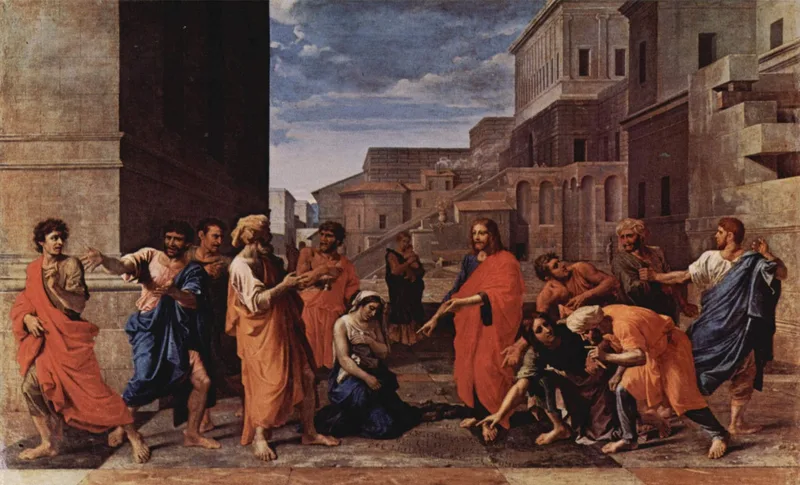
A judgement scene without a judgement
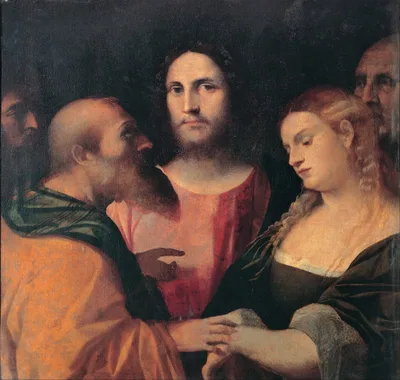
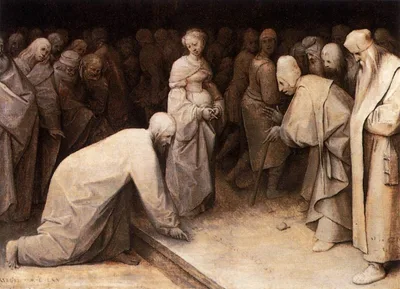
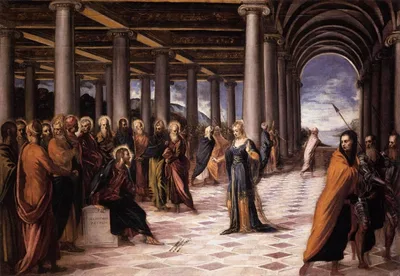
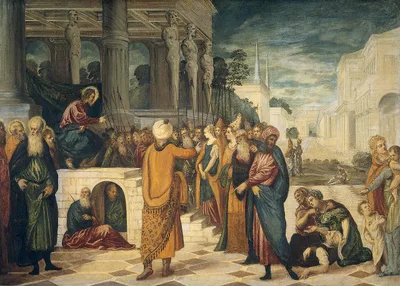
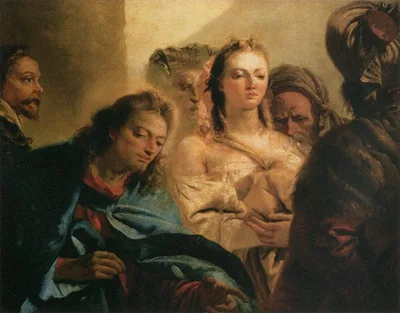
The episode from the eighth chapter of John turns on a trap. The scribes and Pharisees bring a woman taken in adultery and cite the law that requires stoning; the question is put so that any answer convicts the answerer. The reply refuses the terms — let him who is without sin cast the first stone — and the accusers disperse. Nothing is decided; the scene ends by emptying.
Where it falls
In the Jerusalem teaching, during the ministry. In a cycle it belongs with the other confrontations with the religious authorities — the tribute money, the cleansing of the Temple — that accumulate through the last stretch of the narrative before the arrest.
The record
The catalogue gives Nicolas Poussin, 1653, and the Louvre in Paris, at 122 by 153 centimetres. The artist is entered as French. No style is recorded for this entry, so none is stated here; most works of the period in this catalogue are filed under Baroque, but the record does not say so in this case and a classification is not invented for it. The subject fields class the work as a group composition and as religious. The measured palette reads as brown and red. There is no provenance note in the entry.
Sources
2 references- Poussin, Nicolas — Getty ULAN
French painter and draftsman, 1594-1665, active in Italy
- Nicolas Poussin — Wikipedia
Nicolas Poussin (UK: , US: , French: [nikɔla pusɛ̃]; June 1594 – 19 November 1665) was a leading painter of the classical French Baroque style, although he spent most of his working life in Rome. Most of his works were on religious and myth