Hand-painted in oil
About this Artwork
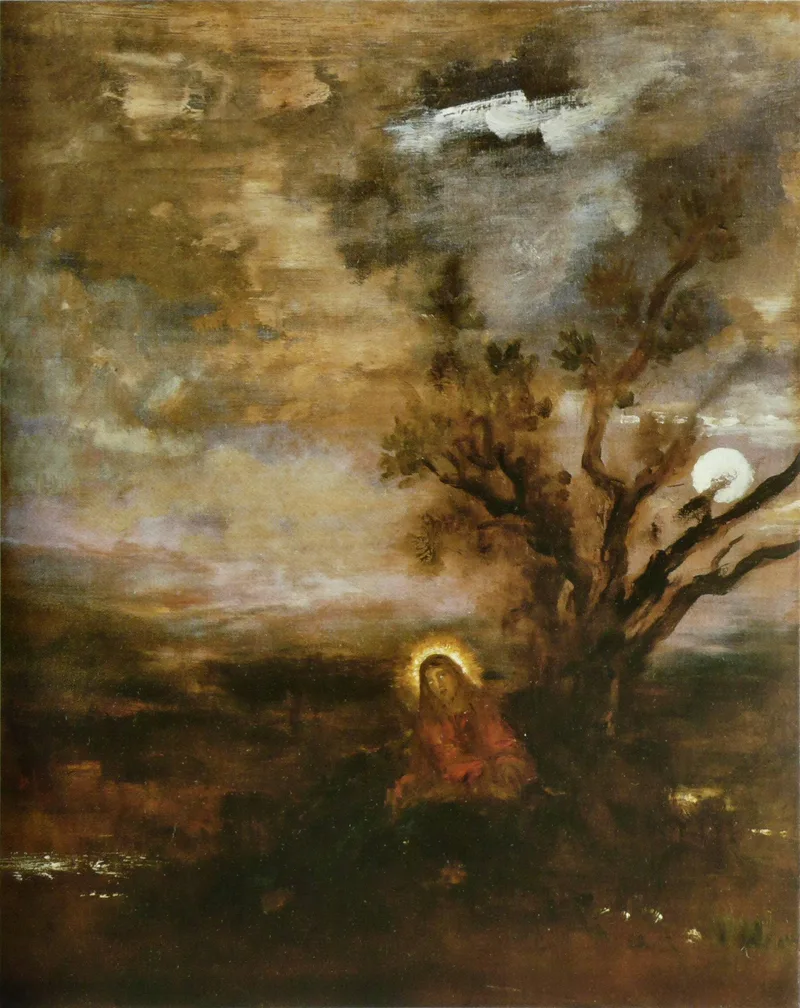
The garden, named without its hour
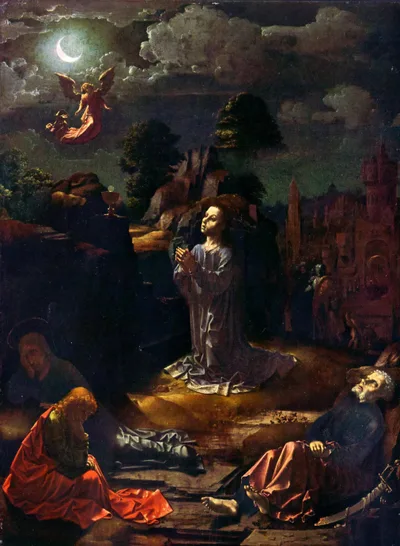
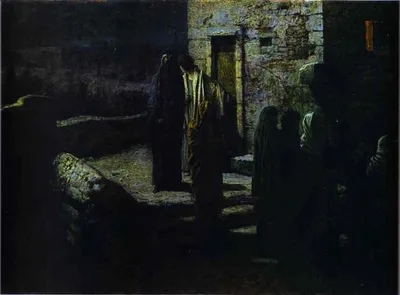
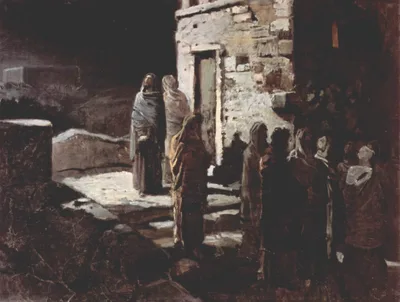
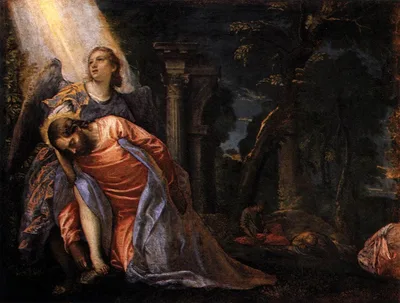
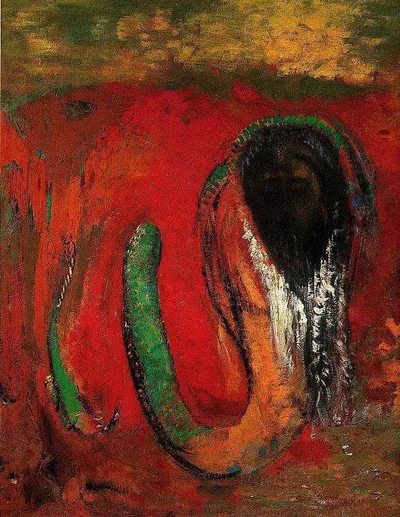
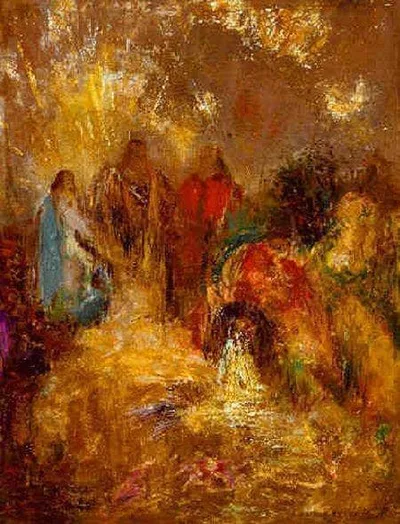
The title gives a place and no event. In the cycle, the garden is Gethsemane, where Christ prays after the supper and before the arrest, and where the disciples sleep. A title that says only in the garden keeps the episode and drops the incident, which is a habit of late nineteenth-century religious painting: the setting carries the meaning and the action is withheld.
Where it falls in the sequence
At the last stretch of the night. Behind it is the supper; ahead, within the hour, the arrest and the trials. Six titles in this catalogue name Gethsemane outright, and others, like this one, name the mount or the garden instead — the same episode arriving under three different words.
The catalogue entry
The record names Gustave Moreau, dates the work to 1880, and places it in the Musee National Gustave Moreau, Paris, France — a museum that carries the painter's own name, which is what the location field records and nothing more. It measures 80 x 75 cm, close to square and small. The style is entered as Symbolism and the artist as French. The subject fields class the work under landscape and forest as well as under religion, a filing that matches a title naming a garden. The measured palette reads as brown.
Sources
5 references- Musée Gustave Moreau — Getty ULAN
French repository, Paris, contemporary
- Gustave Moreau — Wikipedia
Gustave Moreau (French: [ɡystav mɔʁo]; 6 April 1826 – 18 April 1898) was a French artist and an important figure in the Symbolist movement. Jean Cassou called him "the Symbolist painter par excellence". He was an influential forerunner of s
- Moreau, Gustave — Getty ULAN
French painter, 1826-1898
- Christ at Gethsemane — Wikidata
description: painting by Gustave Moreau (Cat. 596); inception: 1875-01-01; dimensions: 80 × 75 cm
- Moreau - Christ in the Garden of Olives, lot-5965047 — Wikimedia Commons
High-resolution image of the work, hosted on Wikimedia Commons.