Hand-painted in oil
About this Artwork
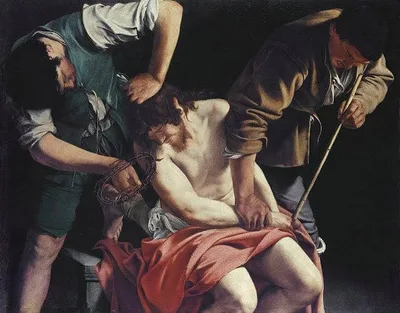
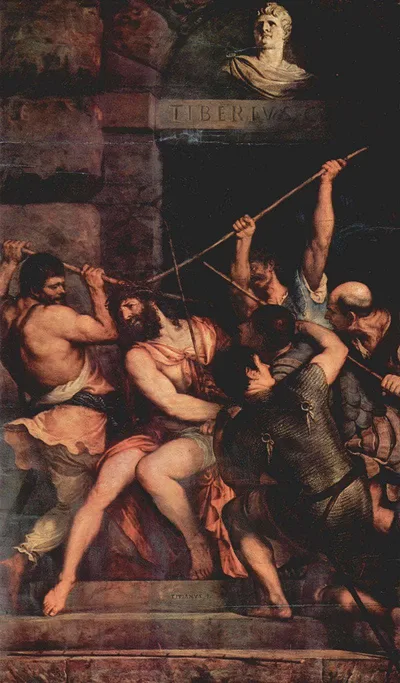
The mocking and the crown
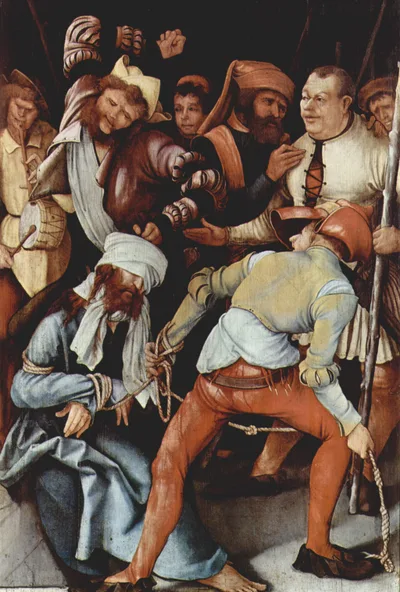
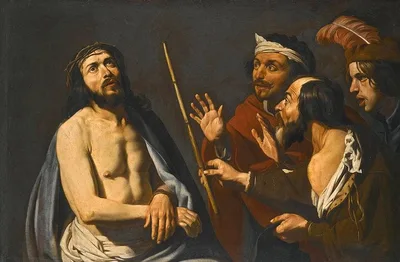
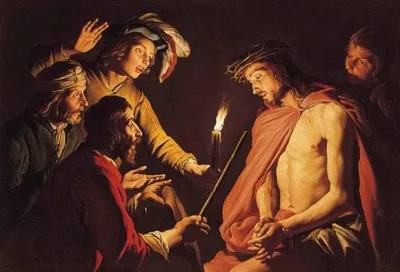
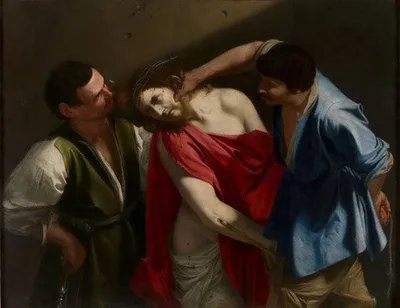
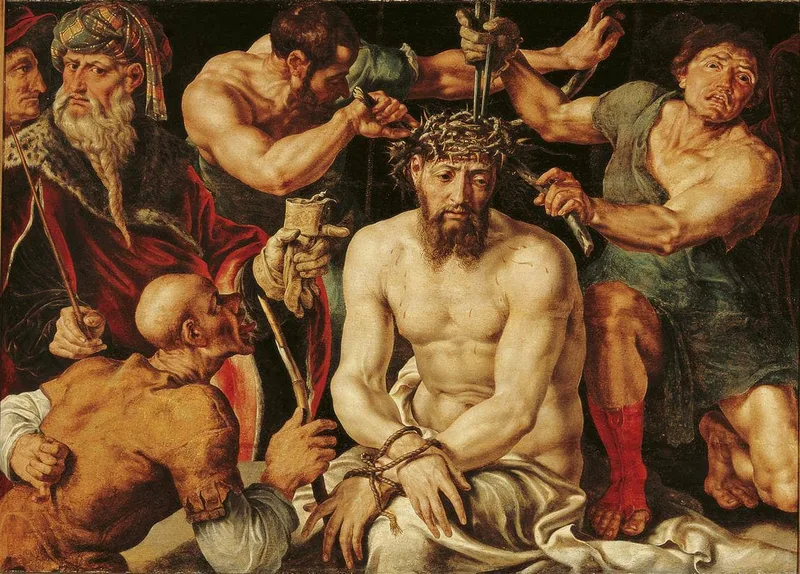
The soldiers' mockery follows the scourging: a crown of thorns is plaited and pressed down, a robe is put on, a reed is placed in the hand, and the salute is made. Matthew, Mark and John all report it. The scene is one of the few in the Passion with no authority figure present — Pilate has withdrawn and the soldiers are unsupervised, which is precisely what the episode is about.
Where it falls
In the praetorium, between the flagellation and the Ecce Homo. Twelve titles in this catalogue carry the word thorns, against twenty-four that name the crucifixion or place Christ on the cross.
The record
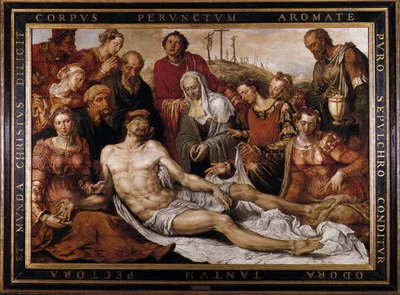
The catalogue names Maerten van Heemskerck, dates the work to 1550, and gives the Frans Hals Museum in Haarlem, Netherlands. It measures 99 by 138.5 centimetres, a horizontal — a wide format for a subject usually built as an upright cluster, and one the record states without explaining. The style is entered as Mannerism and late Renaissance and the artist as Dutch; the subject fields class the work as a male figure and as religious. The measured palette reads as ochre. No commission or earlier location is recorded.
Sources
2 references- Heemskerck, Maerten van — Getty ULAN
Dutch painter, printmaker, and draftsman, 1498-1574
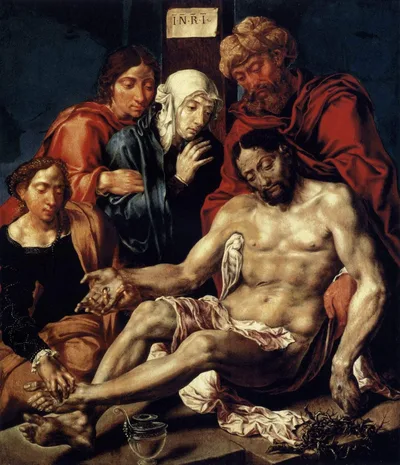
- Lamentation of Christ (Heemskerck) — Wikipedia
Lamentation of Christ is a c. 1540 panel painting of the common subject of the Lamentation of Christ by the Dutch Renaissance painter Maarten van Heemskerck in the Museum of Fine Arts, Budapest. The panel shows the lamentation of Christ wit